
Welcome to Pinterest Tested! In a world brimming with online tips and tricks, it’s easy to wonder if those enticing pins truly deliver on their promises. From miracle cleaners to gourmet recipes and clever home hacks, we’re here to cut through the hype and bring you the unvarnished truth. Each week, we select a captivating pin that catches our eye and put it through a rigorous real-world test, evaluating its claims against practical experience. Think of us as the Mythbusters of modern domesticity, separating fact from fiction so you don’t have to waste your time or resources!
Pinterest Tested: Can Homemade Dishwasher Detergent Really Save You Money and Deliver Sparkling Clean Dishes?
This week, our investigative journey takes us into the heart of the kitchen, challenging a popular belief that you can craft your own effective and budget-friendly dishwasher detergent right at home. The specific inspiration for this deep dive came from this viral Pinterest pin, which promised a simple solution to expensive store-bought options. Our central question for the test: Can homemade dishwasher detergent effectively clean my dishes and significantly reduce my household expenses?
The Quest for DIY Cleaning: From Laundry to Dishwashing
My journey into homemade cleaning solutions began a few weeks prior with a successful experiment in making my own laundry soap. The results were so impressive – clean clothes, less chemical exposure, and noticeable savings – that it naturally sparked curiosity about other potential DIY alternatives. The dishwasher, being one of the most frequently used appliances in many homes, seemed like the perfect next target. The idea of replicating the laundry soap’s success with dishwasher detergent, potentially leading to even greater savings, was incredibly appealing.
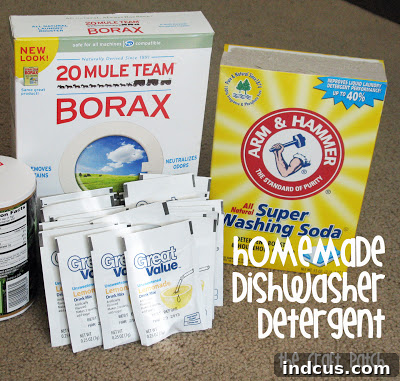
What I quickly discovered was that crafting your own dishwasher detergent is, surprisingly, even simpler than making laundry soap. One of the common tasks often associated with DIY soap, like grating bar soap, is entirely absent from most dishwasher detergent recipes. This makes the preparation process remarkably quick and straightforward. In fact, the most labor-intensive part of this particular recipe was merely opening all the small packets of lemonade powder – a minor hurdle compared to the potential benefits!
Unpacking the Ingredients: What Goes Into DIY Dishwasher Detergent?
The core recipe for this homemade dishwasher detergent is surprisingly minimalistic, relying on a few key ingredients known for their cleaning and water-softening properties. I combined one box of Borax, one box of washing soda, and twenty-four packets of lemonade powder in a large ice cream bucket. With a quick mix, the detergent was ready to use. It’s truly that simple!
Let’s take a closer look at these essential components and their roles in the cleaning process:
- Borax (Sodium Borate): A natural mineral, Borax is a powerful cleaning booster. It helps to soften hard water, allowing detergents to work more effectively, and also acts as a deodorizer and stain remover. Its alkaline properties aid in breaking down grease and food residues.
- Washing Soda (Sodium Carbonate): Distinct from baking soda, washing soda is a stronger alkali. It’s excellent at cutting through grease and dissolving dirt. Like Borax, it helps to soften water, preventing mineral deposits and improving cleaning performance.
- Lemonade Powder (with Citric Acid): This is where the recipe gets a bit creative and often raises questions. The primary function of lemonade powder (specifically the citric acid content within it) is to act as a natural descaler and brightener. Citric acid is highly effective at dissolving mineral deposits and hard water stains, preventing the dreaded “white film” on dishes. While some recipes call for pure citric acid, which can be harder to find in some stores, using lemonade powder offers a fun and accessible alternative. Who knew cleaning could involve a hint of Kool-Aid?
- Optional Salt: Some homemade detergent recipes suggest adding 3 cups of salt. Salt, particularly coarse salt, can act as a water softener, especially beneficial in areas with very hard water. It also helps to prevent spots and film. In my initial test, I opted to omit the salt, mainly due to a forgotten trip to the store and a desire to simplify the process. This decision would later prove to be an important factor in my long-term results.
The Unsung Hero: White Vinegar as a Rinse Aid
An absolutely crucial, non-negotiable component of this homemade dishwasher system is the use of white vinegar as a rinse aid. Without it, even the best detergent can fall short, leaving dishes with a milky, white film. White vinegar is a natural acid that neutralizes alkaline detergent residues and mineral deposits from hard water, ensuring your dishes come out sparkling and spot-free. Incorporating it is incredibly simple: I just unscrewed the small round lid of my dishwasher’s rinse aid dispenser, poured white vinegar into the reservoir until it reached the fill line, and then screwed the lid back on. This step is effortless and makes a significant difference in the final outcome.
Application and Cost-Benefit Analysis: The Promise of Savings
Using the homemade detergent is straightforward: I plan to use just one tablespoon of the mixture for every load of dishes. This minimal quantity contributes significantly to the projected cost savings.
Let’s break down the initial investment for the ingredients:
- Borax: $3.38
- Washing Soda: $3.17
- Lemonade Packets: $2.88 (at $0.12 per packet for 24 packets)
- Total Initial Investment: $9.43
Upon measuring, this single batch yielded enough detergent for approximately 236 loads of dishes, assuming a one-tablespoon usage per load. This calculation reveals an astonishing cost of about 4 cents per load. When compared to the average price of store-bought dishwasher detergent, which typically hovers around 14 cents per load, the savings potential becomes immediately apparent.
To put this into perspective: if a household washes just one load of dishes per day, switching to this homemade detergent could save approximately $36 per year. For busier households that average two loads of dishes daily, the annual savings could more than double, reaching an impressive $73! These figures, while seemingly modest individually, represent a substantial cumulative saving over time, especially when considering other potential DIY cleaning switches. The financial incentive alone makes this a very attractive option for budget-conscious individuals.
Initial Enthusiasm: First Impressions of the Homemade Detergent
With the detergent mixed and the rinse aid dispenser filled with vinegar, it was time for the real test. I started using the homemade mixture on my regular loads of dishes, eager to see if it could stand up to the challenge. For the first four loads, the results were remarkably promising. My dishes emerged from the dishwasher looking just as clean and sparkling as they did when I used my usual, much more expensive Cascade detergent. There was no visible difference in cleanliness or shine, no lingering food particles, and no noticeable film. Everything seemed to be working perfectly, reinforcing the initial belief that this Pinterest hack was indeed a winner. The ease of making the detergent, combined with the significant cost savings and seemingly comparable performance, made me genuinely optimistic. It appeared I had found another fantastic DIY solution for household chores!
The Unexpected Turn: Long-Term Observations and Challenges
THE INITIAL RESULTS: This homemade dishwasher detergent appeared to work just as well as my expensive store-bought brand, saving a substantial dime every time I ran a load of dishes. Given how many loads I seem to do, these savings were set to add up quickly! And as an added bonus, the process of making it was incredibly simple and quick.
Update: Several Weeks Later
Now that I’ve had the opportunity to use this homemade detergent for an extended period, I must share a crucial update: I do not like it! While the initial few loads seemed to wash without issue, a significant problem began to emerge. I started noticing a pronounced white, filmy residue building up on my glass plates and cups. This wasn’t a subtle haze; it was a very noticeable and unpleasant film that clung stubbornly to the glassware, making them appear dirty even after a wash cycle. This issue progressively worsened with each subsequent wash, completely undermining the detergent’s effectiveness and the aesthetic appeal of my dishes.
Further Update: Addressing the White Film
In an attempt to combat the persistent white film, I introduced LemiShine, a commercial product designed to remove hard water spots and film, into my washing routine. LemiShine did indeed prove effective at keeping my dishes from developing the dreaded film. However, this solution presented a new dilemma: LemiShine is an additional expense. Its cost significantly eroded the very financial savings that were the primary motivation for making homemade detergent in the first place. The original goal was to save money, and by needing to purchase an expensive additive, the core purpose of this DIY project was defeated. I will certainly use up the remaining batch of homemade detergent that I’ve already prepared, but based on these long-term results and the necessity of supplementary products, I definitely won’t be making more in the future.
The Science Behind the Film and the Final Verdict
The dreaded white film, often referred to as “etching” or “hard water spots,” is a common problem in dishwashers, particularly when dealing with hard water or insufficient rinsing. It’s usually caused by the accumulation of undissolved minerals (like calcium and magnesium) from hard water or residue from highly alkaline detergents. While the vinegar rinse aid helps, it might not be enough to counteract the specific pH balance and cleaning power required for consistently spotless results with some homemade formulations, especially over time. My experience suggests that while the initial effectiveness was promising, the homemade detergent, in this particular formulation, wasn’t able to consistently handle the mineral content in my water or fully rinse away residues, leading to the cumulative film.
This experience underscores a critical lesson in the world of DIY cleaning: not all homemade solutions are created equal, and what works for one household might not work for another due to variables like water hardness, dishwasher model, and specific cleaning needs. While the concept of homemade dishwasher detergent is appealing for its simplicity, cost-effectiveness, and reduced chemical exposure, the practical application revealed its limitations for my household.
Reflecting on the Pinterest Test
The journey with this homemade dishwasher detergent, from enthusiastic mixing to eventual disappointment, perfectly encapsulates the spirit of “Pinterest Tested.” It’s about more than just a recipe; it’s about validating claims, understanding the practical implications, and sharing honest, real-world results – both the successes and the failures. While this particular hack didn’t live up to its long-term promise for me, the process was invaluable. It highlighted the importance of a thorough testing period and demonstrated that sometimes, the convenience and consistent performance of commercial products, despite their cost, might be justified.
For those still seeking more natural or cost-effective dishwashing solutions, this experience encourages further exploration. Perhaps tweaking ingredient ratios, adding salt, or exploring other homemade recipes could yield different results. Alternatively, focusing on eco-friendly commercial brands that prioritize natural ingredients might be a more reliable path for some. The ultimate goal remains the same: clean dishes and a happy home, achieved through informed choices.
Have you tried making your own dishwasher detergent? What were your results? Share your experiences and tips in the comments below! We love hearing from our community and learning from your adventures in domestic experimentation.