Crafting Joy: Unveiling My Handmade Fabric Quiet Book for Kids
Hello fellow crafters and parents! It’s been a bit quiet on the blog lately, but rest assured, my hands have been anything but idle. I’ve been deeply immersed in several exciting craft projects, diligently working to bring them to a point where they are ready to share. While you await those fresh creations, I’m thrilled to take you back in time to a project that holds a very special place in my heart: a truly enchanting fabric quiet book that I completed a few years ago. This wasn’t just any craft; it was an ambitious undertaking, a labor of love that began with a spark of inspiration and blossomed into a comprehensive, interactive learning tool for little ones.
The idea for this quiet book first captured my imagination when I saw a friend with a similar book at church. I was instantly smitten by its charm and the endless possibilities it offered for engaging young minds. The thought of creating something so tactile, so personal, and so beneficial for early childhood development was irresistibly appealing. What started as a whimsical idea quickly evolved into a significant creative endeavor. Little did I know at the time just how expansive and intricate this project would become – a true test of patience, creativity, and nascent crafting skills. It felt, at times, like a joyful, never-ending journey into the world of fabric and felt!
This quiet book stands as a testament to learning and growth. It was my very first venture into such intricate crafting, and crucially, my first attempt at applique – a technique that quickly became a beloved challenge. Some pages in the book are born purely from my imagination, original designs that I meticulously brought to life. Others draw inspiration from the book my friend had, adapted and reimagined to fit my vision. Regardless of their origin, each page was crafted with immense care, aiming to provide a unique blend of fun and educational value for the curious hands that would eventually explore them.
Embark on a visual journey with me as we delve into the heart of this fabric quiet book, exploring each carefully constructed page and the skills it aims to foster. This isn’t just a collection of pretty pictures; it’s a deep dive into how a simple piece of fabric can transform into a gateway for learning, imagination, and quiet play.
Exploring Each Engaging Page: A Journey of Discovery
Let’s turn the pages and uncover the magic within this handmade treasure. Each section is designed to stimulate different aspects of a child’s development, from fine motor skills to imaginative storytelling.
1. The Artist’s Palette: A Spectrum of Learning
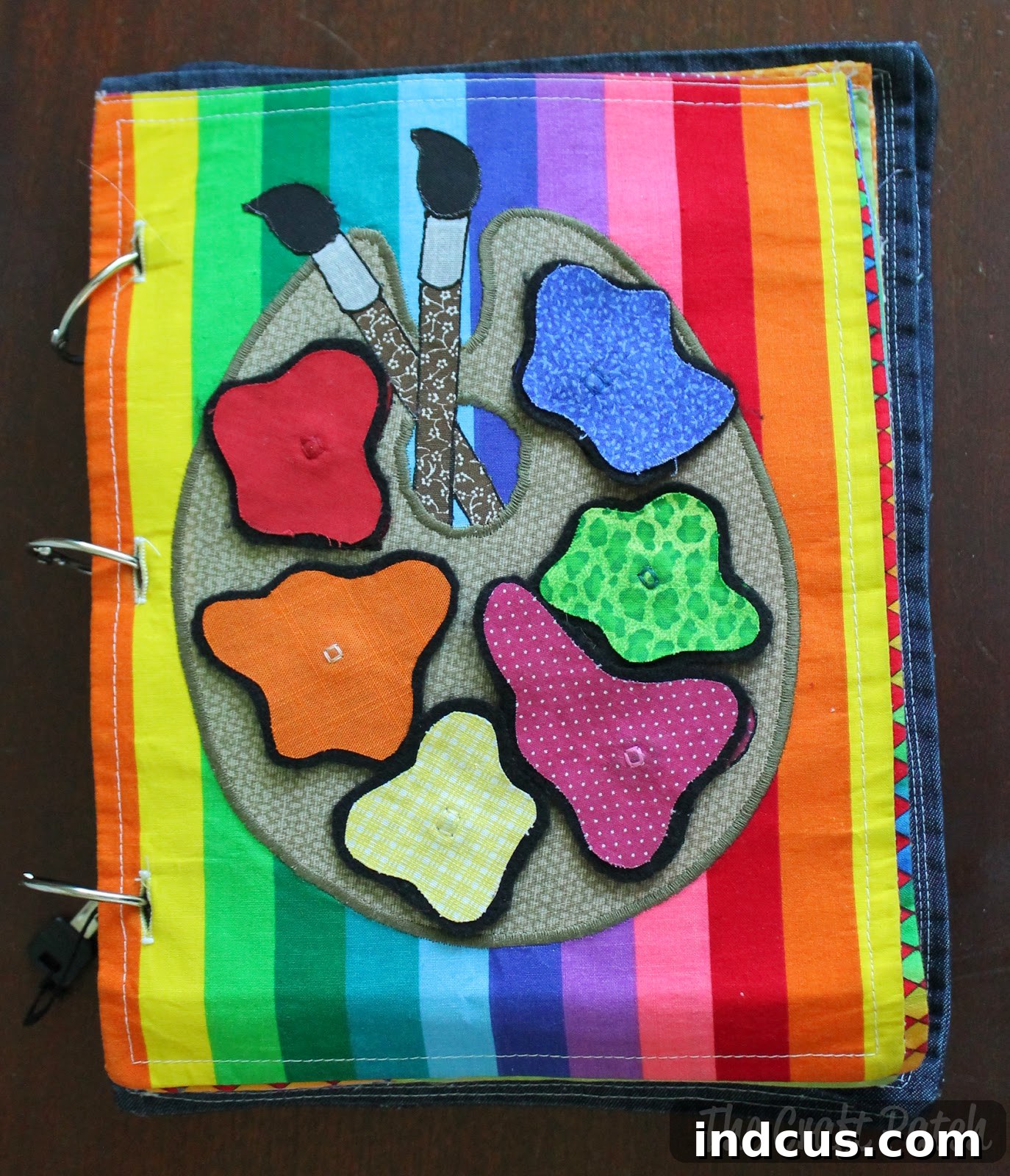
Our journey begins with a vibrant and interactive artist’s painting board. This page is ingeniously designed for color matching, featuring various paint splotches that children can connect with corresponding colors. It’s a fantastic way to introduce and reinforce color recognition while also developing hand-eye coordination and problem-solving skills. The tactile experience of manipulating the colorful pieces makes learning an engaging and delightful activity, setting a playful tone for the rest of the book.
2. Elephant’s Treat & Buckle Up Fun
The next spread offers a dual delight. On one side, children can interact with a charming elephant, pulling its tail to guide “peanuts” into its mouth. This simple yet effective activity is brilliant for developing fine motor skills, encouraging dexterity, and understanding cause and effect. It’s a wonderful way to teach children gentle manipulation and storytelling through play. Adjacent to this, we have a pair of pants featuring a real belt and buckle. This practical life skill page allows kids to practice buckling and unbuckling, mastering an essential task that contributes to their independence. It’s a subtle yet powerful lesson in self-care, disguised as engaging play.
3. Unlocking Adventures & Tying Laces
This particular spread often becomes a fast favorite, and for good reason! It features a delightful little treasure chest that children can actually unlock. The thrill of opening the lock and discovering what’s inside—sometimes a small, exciting treat—is immense. This page not only teaches basic locking mechanisms but also sparks imagination and the joy of discovery. It’s an engaging way to build fine motor skills and problem-solving abilities. On the facing page, children can practice the crucial skill of tying shoelaces. This practical activity helps develop hand-eye coordination, finger strength, and the patience required for a fundamental life skill, all within a fun and no-pressure environment.
4. Money Matters & Hilarious Faces
This spread thoughtfully introduces concepts of saving and sharing, albeit in a playful way. Children can decide how much “money” to allocate to a tithing envelope and how much to deposit into a cute piggy bank. This activity subtly teaches basic numeracy and the concept of choice, providing an early introduction to financial literacy. Adjacent to this, another personal favorite page awaits: the funny faces page! Made of soft felt, the face is sewn onto a pocket that cleverly stores various felt pieces for eyes, noses, and mouths. Kids can mix and match these pieces to create countless hilarious expressions, fostering creativity, emotional recognition, and imaginative play. It’s endlessly entertaining and a fantastic way to encourage self-expression.
5. The Growing Family Tree & Jonah’s Adventure
Ah, the ongoing saga of a crafting project! The tree on this page is envisioned as a “family tree,” complete with little apples designed to hold pictures of family members. I confess, those pesky apples are still awaiting their final touches – a gentle reminder that some projects truly are never-ending, or at least beautifully continuous! This page offers a lovely opportunity for children to learn about their family, recognize faces, and develop a sense of belonging. Opposite this, we dive into a classic story with the Jonah and the Whale page. The whale features a working zipper mouth, allowing him to “eat” Jonah. This interactive element brings the biblical story to life, enhances fine motor skills through zipper manipulation, and encourages imaginative storytelling, making it a rich sensory experience.
6. Paper Dolls’ Home & The Lively Race Track
This versatile spread features a vibrant red and blue pocket, perfectly sized to house a collection of paper dolls. These dolls, which I’ve shared in a previous magnetic quiet book post, provide endless opportunities for imaginative play, character development, and narrative creation. Children can dress them up, create stories, and engage in pretend play, fostering creativity and social-emotional skills. On the adjacent page, an exciting race track awaits! The road signs are designed to unsnap and be repositioned, allowing children to customize their track layout. A small car can be parked in the light green pocket, ready for countless adventures. This page encourages creative thinking, spatial reasoning, and fine motor skills as they manipulate the car and signs.
7. Hair Braiding Fun & Magnetic Fishing Adventure
The imaginative play continues with the hair braiding page. Featuring a friendly character with fabric “hair,” children can practice braiding, tying, and styling, which are excellent exercises for developing fine motor skills and patience. Additionally, the flowers on her hat can be unbuttoned, adding another layer of tactile engagement and practicing another crucial life skill. On the next page, an engaging magnetic fishing game comes to life! The water is cleverly designed as a pocket, perfectly sized to hold a collection of fish and the fishing rod. This activity enhances hand-eye coordination, concentration, and introduces children to basic concepts of magnetism, providing hours of quiet, focused play.
8. Creative Corner: Paper & Crayons
The quiet book concludes with a dedicated creative corner. This final page features two practical pockets: one perfectly sized to hold a small pad of paper, and the other designed to store a set of crayons. This thoughtful addition ensures that the book provides a complete quiet-time activity, allowing children to seamlessly transition from interactive fabric play to drawing and expressing their creativity. It’s an ideal way to encourage artistic exploration and independent quiet play, rounding out the diverse range of activities offered within the book.
And so, the journey through this beloved fabric quiet book comes to an end – for now! Perhaps one day I will finally dig out the suitcase overflowing with fabric scraps from this very project and complete those few other pages I had started. But for the moment, my focus remains on the new and exciting crafts already underway. It’s a delightful dilemma for any passionate maker!
The Enduring Appeal of Quiet Books: More Than Just a Toy
Creating a fabric quiet book is more than just a craft project; it’s an investment in a child’s development and a gift of quiet, focused engagement. These books are invaluable tools for:
- Developing Fine Motor Skills: From buttoning and zipping to lacing and manipulating small pieces, every page offers opportunities to refine dexterity and hand-eye coordination.
- Fostering Cognitive Development: Activities like color matching, shape sorting, and puzzle-solving stimulate critical thinking and problem-solving abilities.
- Encouraging Practical Life Skills: Learning to tie laces, buckle belts, and manage snaps provides children with confidence and independence.
- Igniting Imagination and Creativity: Pages like the funny faces or race track invite open-ended play and storytelling, allowing children to create their own narratives.
- Promoting Quiet Time and Concentration: In a world filled with digital distractions, quiet books offer a gentle, screen-free alternative that encourages sustained attention and peaceful exploration.
- Enhancing Sensory Exploration: The variety of fabrics, textures, and manipulatives provides rich tactile experiences.
Tips for Your Own Quiet Book Journey
Inspired to create your own fabric quiet book? Here are a few tips from my experience:
- Start Simple: Don’t feel pressured to create an overly complex book for your first attempt. Begin with simpler pages and techniques, like basic shapes or buttons.
- Embrace the Learning Curve: Applique and intricate sewing can be challenging. Be patient with yourself, and view every “mistake” as a learning opportunity.
- Gather Your Materials Thoughtfully: Fabric scraps are perfect! Felt, cotton, zippers, buttons, snaps, velcro, and ribbons are all common quiet book components.
- Consider the Child’s Age: Design pages that are appropriate and safe for the intended recipient. Avoid very small, detachable pieces for babies or very young toddlers.
- Personalize It: Adding elements unique to the child, like their favorite animal or initial, makes the book even more special.
- It’s Okay to Not Finish Everything at Once: As my family tree demonstrates, these can be ongoing projects. Enjoy the process and complete it at your own pace.
If you’ve enjoyed this detailed look into my fabric quiet book, you might find inspiration in some of my other quiet book creations:
The Original Fabric Quiet Book
Personalized Fabric Name Book
“Favorite Things” Book
Boy Felt Name Book
Boy Felt Name Book 2
Girl Felt Name Book