
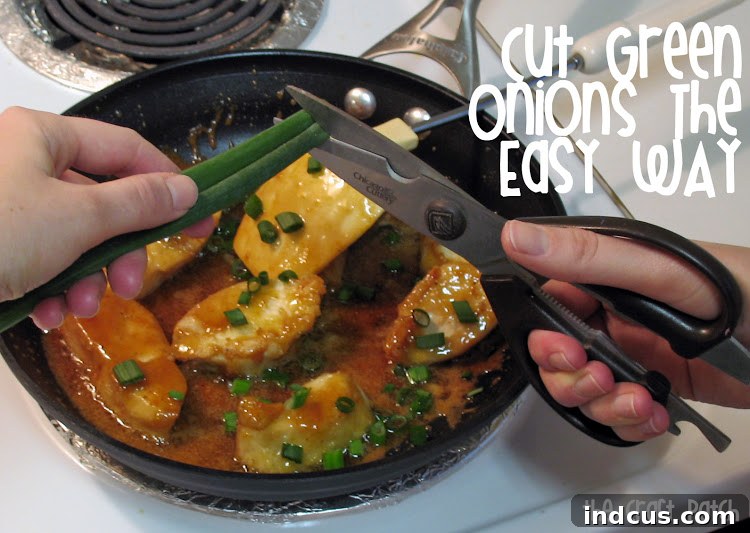
The Ultimate Guide to Effortlessly Cutting Green Onions: Your New Favorite Kitchen Hack
If you’re among the growing number of home cooks embracing sustainable practices by regrowing store-bought green onions, you’re already familiar with the joy of fresh produce on demand. There’s a certain satisfaction in watching those vibrant green stalks sprout anew from simple scraps. But once your bountiful harvest is ready, have you ever wished for an even quicker, simpler way to prepare them for your culinary creations?
For years, I meticulously chopped green onions with a knife – a task often tedious, sometimes messy, and rarely as precise as I hoped. Then, a friend revealed a brilliant trick, a culinary revelation so simple yet so profound, it left me wondering: “Why didn’t I think of that?!” It was an instant game-changer, transforming a minor kitchen chore into a lightning-fast, enjoyable step in meal prep. This isn’t just a tip; it’s a fundamental shift in how you’ll approach one of your favorite garnishes and ingredients.
Why Green Onions Deserve a Spot in Your Kitchen
Green onions, also known as scallions or spring onions, are truly a powerhouse ingredient. Their mild, oniony flavor adds a fresh, zesty kick without overpowering other elements in a dish. From being a vibrant garnish on soups, stir-fries, and tacos to an integral component in salads, omelets, and dressings, their versatility is unmatched. They bridge the gap between onion and chive, offering a delicate crunch and a beautiful splash of green that elevates both taste and presentation.
Beyond their culinary appeal, green onions are incredibly practical. The ability to regrow them from their roots makes them an almost infinite resource, reducing food waste and saving you countless trips to the grocery store. This sustainable practice not only benefits your wallet but also ensures you always have fresh, organic green onions at your fingertips. Given their frequent use and renewable nature, finding the most efficient way to prepare them becomes not just a convenience, but a necessity.
The “Aha!” Moment: Embracing the Power of Kitchen Scissors
Imagine this common scenario: You’ve just harvested a fresh batch of green onions from your windowsill garden. You grab your cutting board and a sharp chef’s knife. You meticulously line up the stalks, attempting to achieve uniform slices. It’s a process that often feels slow, involves careful finger placement to avoid nicks, and usually results in some scattered pieces across your counter. While effective, it’s far from effortless, especially when you’re in a hurry or preparing multiple dishes.
Now, picture a different approach. No more balancing acts with a knife, no more constant repositioning of your fingers. The secret to transforming your green onion prep lies in a humble, yet incredibly effective, tool often overlooked for this specific task: your kitchen scissors. This simple switch is the “aha!” moment I experienced, and it will revolutionize your cooking routine.
It’s so easy. See for yourself:
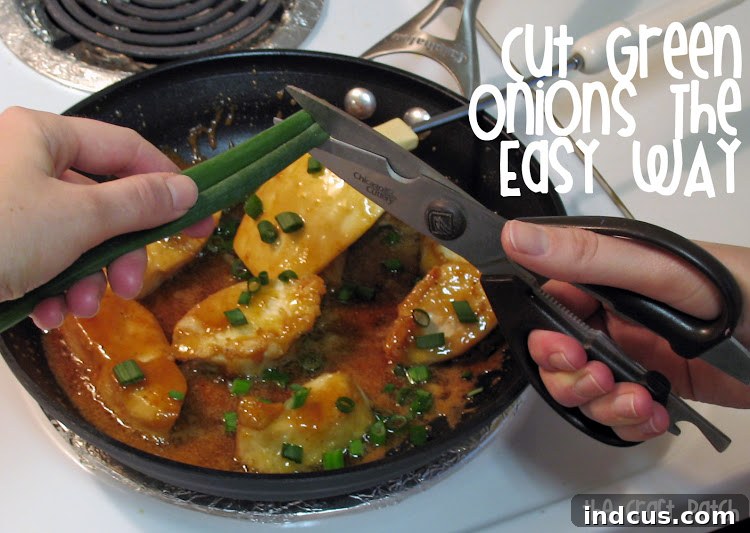
Yes, it’s that straightforward! Using kitchen scissors to snip your green onions is incredibly quicker, significantly easier, and remarkably more precise than fumbling with a knife. It’s a trick that once learned, you’ll wonder how you ever managed without it.
How to Master the Kitchen Scissors Technique
Embracing kitchen scissors for your green onions requires minimal effort and delivers maximum reward. Here’s a simple step-by-step guide to get you started:
What You’ll Need:
- Freshly harvested or store-bought green onions
- A sharp pair of kitchen scissors (clean and dedicated for food use)
- A bowl or container to catch the chopped onions
The Simple Steps:
- Prepare Your Green Onions: First, ensure your green onions are clean. Wash them under cool running water, especially if they have any visible dirt. Pat them dry with a paper towel or let them air dry briefly. Excess moisture can make them slippery and difficult to handle.
- Gather and Bunch: Hold a bunch of green onions together in one hand. You can hold as many as you can comfortably grip, but start with a smaller bunch if you’re new to this method. Align the stalks so they are relatively even.
- Position Over a Bowl: Hold the bunched green onions directly over your waiting bowl or container. This ingenious step ensures all your precisely cut pieces fall exactly where they should, minimizing mess on your cutting board or countertop.
- Snip Away! With your kitchen scissors, begin snipping across the green onion stalks. Adjust the width of your cuts to your preference – whether you need fine, delicate rings for a garnish or slightly thicker pieces for a stir-fry. The motion is intuitive and controlled. You’ll be amazed at how quickly you can process an entire bunch.
- Focus on the Green Parts (and White, too!): While the vibrant green tops are often the star, don’t forget the white and light green parts of the green onion. These offer a slightly stronger, more pungent flavor. You can snip them separately or along with the greens, depending on your recipe and desired flavor profile.
Beyond Speed: The Multifaceted Benefits of the Scissors Method
While speed and ease are undoubtedly the primary allure of using kitchen scissors for green onions, the advantages extend far beyond just saving a few minutes. This simple hack brings a host of benefits that enhance your overall cooking experience:
- Unmatched Efficiency: Say goodbye to the repetitive up-and-down motion of a knife. With scissors, you can process a large bunch of green onions in a fraction of the time, making meal prep significantly faster.
- Enhanced Safety: For many, using a sharp knife can be intimidating, especially when making small, precise cuts. Kitchen scissors provide a more controlled and stable cutting experience, drastically reducing the risk of accidental nicks or cuts. This is particularly beneficial for beginner cooks or those with dexterity challenges.
- Superior Precision: Achieving perfectly uniform rings with a knife requires significant skill. Scissors make it effortless to create consistent, attractive slices, which is ideal for garnishes where presentation matters.
- Minimal Mess: By snipping directly into your pot, pan, or serving bowl, you eliminate the need for a cutting board entirely, or at least keep it much cleaner. No more chasing runaway green onion pieces across your counter!
- Direct Integration: Need a sprinkle of green onions over a finished dish? Just grab your scissors and snip directly. This direct-to-dish approach is incredibly convenient and reduces the number of utensils and surfaces you need to clean.
- Versatility for All Skill Levels: Whether you’re a seasoned chef or just starting your culinary journey, this method is accessible and effective for everyone.
Choosing the Right Kitchen Scissors for the Job
Not all scissors are created equal, and for optimal performance in the kitchen, a dedicated pair of high-quality kitchen scissors is a worthwhile investment. Here’s what to look for:
- Sharpness: This is paramount. Sharp blades ensure clean cuts without crushing the delicate green onion stalks.
- Durable Construction: Look for stainless steel blades that are rust-resistant and sturdy.
- Comfortable Grip: Ergonomic handles will prevent hand fatigue, especially if you’re tackling larger quantities.
- Easy to Clean: Some kitchen shears detach for thorough cleaning, which is excellent for hygiene. If yours don’t detach, ensure they are designed to be easily rinsed and dried.
- Dedicated Use: Keep a separate pair of scissors solely for kitchen tasks to maintain hygiene and prevent cross-contamination.
Beyond Green Onions: Expanding Your Scissors’ Culinary Horizons
Once you discover the utility of kitchen scissors for green onions, you’ll quickly realize their potential extends far beyond. These versatile tools can streamline many other kitchen tasks:
- Fresh Herbs: Snip cilantro, parsley, chives, basil, or rosemary directly into dishes, making precise cuts for maximum flavor and presentation.
- Dried Fruits: Easily cut sticky dried apricots, figs, or dates for baking or snacking without the mess of a knife.
- Bacon: Cut raw bacon into lardons or smaller pieces directly into a pan, eliminating the need for a cutting board.
- Cooked Poultry: Easily cut cooked chicken, turkey, or other poultry into bite-sized pieces for salads, sandwiches, or stir-fries. Some heavy-duty shears can even tackle poultry bones.
- Pizza & Pasta: Cut slices of pizza quickly and cleanly, or snip fresh pasta into desired lengths.
- Lettuce & Salad Greens: Speed up salad prep by snipping lettuce directly into a bowl.
Tips for Perfect Green Onion Preparation and Storage
To get the most out of your green onions, whether regrown or store-bought, consider these additional tips:
- Proper Washing and Drying: Always wash green onions thoroughly, especially near the root end, to remove any soil. Ensure they are dry before cutting for cleaner slices and to prevent spoilage.
- Storing Freshly Cut Green Onions: Place cut green onions in an airtight container lined with a paper towel. The paper towel absorbs excess moisture, keeping them fresh in the refrigerator for up to 3-5 days.
- Freezing Green Onions: For longer storage, spread chopped green onions in a single layer on a baking sheet and freeze until solid. Then transfer them to a freezer-safe bag or container. They can be used directly from frozen in cooked dishes.
- Utilizing All Parts: The white and light green parts of the green onion have a stronger flavor, similar to a mild onion, and are great for cooking. The dark green tops are milder and perfect for garnishing or adding fresh flavor at the end of cooking.
Addressing Common Green Onion Questions
As you embark on your journey to green onion mastery, you might have a few questions:
- Can you eat the white part of green onions? Absolutely! The white and light green parts are edible and often used in cooking for their slightly more pungent, onion-like flavor. Only the very root end, if tough or dirty, should be discarded (or used for regrowing!).
- How long do regrown green onions last? A single root base can be regrown multiple times, often for several weeks or even months, continuously producing fresh green stalks. The plant itself will eventually lose vigor, at which point you can start anew with a fresh store-bought base.
- What’s the difference between green onions and scallions? In most regions, “green onions” and “scallions” are used interchangeably to refer to the same young onion plant that has not yet formed a bulb. “Spring onions” are very similar but are typically slightly more mature with a small, underdeveloped bulb. For culinary purposes, they can generally be used interchangeably.
Final Thoughts: A Simple Change, A Big Impact
It’s often the simplest changes that yield the most profound improvements in our daily routines. The switch from a knife to kitchen scissors for cutting green onions is a prime example of such a change. It’s a small adjustment that offers significant gains in efficiency, safety, and overall kitchen enjoyment.
So, the next time you’re preparing your freshly regrown (or store-bought) green onions, put down that knife. Reach for your kitchen scissors. Experience the effortless snip, the clean cuts, and the sheer joy of a truly smart kitchen hack. You’ll wonder why you didn’t think of it sooner, and your culinary adventures will be all the better for it!