Pinterest Tested: Can Fabric Softener Truly Restore Matted Doll Hair?
Welcome to Pinterest Tested! In a world brimming with DIY solutions and ingenious life hacks shared across countless digital boards, it’s easy to wonder: do these viral tips truly deliver on their promises? Here at The Craft Patch, we’re dedicated to sifting through the noise, putting popular Pinterest pins to the ultimate real-world test. From miracle cleaners that promise sparkling homes to homemade beauty concoctions and delectable recipes, we embark on a journey akin to the Mythbusters of Domesticity, unveiling the truth behind the digital hype. Today, we’re tackling a universal parental dilemma – the scourge of matted, tangled doll hair.
The Universal Battle Against Tangled Tresses: Saving Beloved Dolls
If you’re a parent, especially one with daughters, you’ve likely encountered the heartbreaking sight of a beloved doll whose once-silky locks have devolved into an unruly, matted mess. It’s an almost inevitable rite of passage for any well-loved toy – hours of imaginative play, countless outfit changes, and perhaps a few accidental baths can quickly transform a doll’s beautiful mane into a nightmare of knots and tangles. I vividly recall my own childhood frustrations with these “crazy hairdos.” Many a Barbie met her fate under my blunt scissors because I simply couldn’t stand their messy, unmanageable hair. It’s a common story, one that resonates with countless families who have witnessed the rapid decline of a doll’s once-pristine hair.
This widespread problem is precisely why THIS PIN, promising a simple solution to salvage ratty doll hair, caught my eye – and undoubtedly the eyes of every mother of girls on Pinterest. The idea of restoring a cherished doll to its former glory, sparing it from the “haircut of doom” or the bottom of the toy box, is incredibly appealing. With countless dolls gathering dust due to unmanageable hair, a quick and effective DIY fix would be a game-changer. But does this widely shared hack truly work, or is it just another beautiful image with a disappointing reality?
The DIY Solution: A Fabric Softener Hair Treatment for Dolls
The Pin suggests a straightforward, budget-friendly approach: a simple mixture of fabric softener and water. The theory is that fabric softener, designed to smooth and untangle fibers in clothing, could work similar magic on synthetic doll hair. Intrigued by the simplicity and the potential to save another doll from the fate of a disastrous hair-do, I decided to put it to the test. This hack promises to transform dry, brittle, and hopelessly tangled doll hair into soft, brushable strands, making playtime enjoyable again.
Gathering Your Supplies: What You’ll Need
Before you begin your doll hair rescue mission, ensure you have these basic items on hand. Most are likely already in your home:
- A doll with matted, tangled hair (the worse the condition, the better for a true demonstration of this hack’s effectiveness!)
- Liquid fabric softener (any brand will do; a standard laundry softener is what we’re testing)
- Water (tap water is perfectly fine)
- An empty spray bottle (a clean, repurposed one is ideal)
- A comb or brush (the original pin recommends a wig brush, but I opted for a regular plastic comb to see if it still works for the average household)
- A towel (to protect your work surface and the doll’s body)
- And most importantly: patience and a bit of elbow grease!
Mixing the Magic Potion for Doll Hair Detangling
Following the instructions from the Pin, the preparation is incredibly simple. I measured out two tablespoons of standard liquid fabric softener into an empty spray bottle. For the remainder of the bottle, I filled it with tap water, ensuring a good ratio for effective application without oversaturating the doll’s hair. A quick shake to thoroughly combine the ingredients, and my DIY detangling spray was ready. The ratio of fabric softener to water is crucial; too much softener can leave a residue, while too little might not be effective enough on severe tangles.
The Wig Brush Debate: To Buy or Not to Buy?
The original Pin explicitly recommended using a “wig brush” for best results, implying it might be superior for synthetic fibers. However, in the spirit of a true at-home hack – and to avoid an extra trip to the store or an unnecessary expense – I decided to forgo the specialized tool. Instead, I grabbed a common, fine-tooth plastic comb from my own vanity. This decision would be a crucial part of my test: could the average household achieve the same miraculous results without purchasing extra equipment? My hope was that the fabric softener itself was the true hero, not the brush, making this hack accessible to everyone.
The Detangling Process: A Hands-On Experiment with Patience
With my spray bottle in hand and my chosen doll (let’s call her Dolly for this experiment) looking particularly disheveled, I began the application. Her hair was a solid, felted mass, defying any attempt at combing. My strategy was to approach this methodically:
- Sectioning the Hair: I started by attempting to section Dolly’s hair as best as I could, given the extreme tangles. Even if you can only create a few large sections, this helps manage the process.
- Applying the Solution: Then, I generously sprayed the fabric softener solution onto one section, ensuring the hair was damp but not dripping wet. The goal was to saturate the matted areas thoroughly, allowing the softener to penetrate and lubricate the tangled strands from root to tip.
- The Combing Technique: The next step was the most daunting: combing. Starting from the very ends of the hair, I began to meticulously work my way up, section by section. This requires a gentle but firm hand. If you encounter a particularly stubborn knot, it’s best to spray a little more solution directly onto it and carefully tease it apart with your fingers before reattempting with the comb. I found that holding the doll’s head firmly to prevent pulling on the hair plugs was essential, especially when dealing with older dolls whose hair might be more prone to coming loose.
- Repeat and Persist: I continued this method – spray, comb, detangle, move to the next section – until I had worked through all of Dolly’s hair. It was a marathon, not a sprint, as each individual tangle needed attention. The fabric softener certainly made a difference, providing a slipperiness that allowed the comb to glide through knots that would have otherwise been impossible to conquer with dry hair. Still, the sheer volume of matted hair meant this was no quick fix; it required sustained effort and determination.
Throughout the process, I wiped excess solution from the doll’s face and body with a towel, ensuring only the hair was treated. This meticulous approach helps prevent any potential residue build-up on the doll’s plastic parts. The process was meditative in its repetitive nature, and I started to see glimmers of hope as sections of Dolly’s hair began to untangle and smooth out.
The Moment of Truth: Before & After Visuals
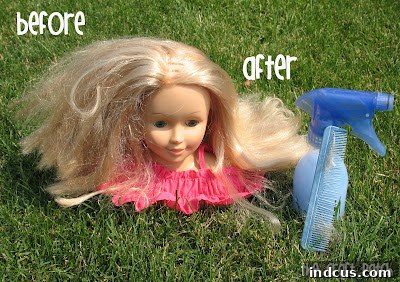
After a dedicated effort of approximately 30 minutes, the results were finally visible. The transformation was quite remarkable, especially considering the severe state of Dolly’s hair at the beginning of this experiment. The pictures speak volumes, illustrating the dramatic change that the fabric softener treatment facilitated.
As you can see, Dolly’s hair went from a chaotic, matted mess to surprisingly sleek and manageable. The individual strands were no longer fused together in stubborn clumps, and the overall texture was significantly softer to the touch. It was a tangible improvement that even I, initially skeptical, had to acknowledge. The once-unruly synthetic fibers now felt much closer to their original, soft state, allowing for easy styling and brushing.
Of course, such a dramatic detangling doesn’t come without some “casualties.” Dolly did shed quite a bit of hair during the process, resulting in a rather impressive hairball by the time I was completely through. This is normal for severely matted hair, as some strands are inevitably too damaged or too tightly tangled to be saved. But considering the alternative of throwing the doll away or giving her a drastic, unwanted haircut, a little shedding is a small price to pay for such a significant restoration.
But despite the accumulation of loose strands, the overall success was undeniable.
The Official Pinterest Tested Verdict: Did It Deliver?
This doll, Dolly, has undoubtedly been saved from the brink of toy-box obscurity. Her transformation is undeniable, her hair now soft, smooth, and easily combable – a far cry from the demonic wild woman look she sported previously. The fabric softener truly worked wonders on the synthetic fibers, breathing new life into what seemed like a lost cause. However, the process was far from effortless. It took significantly more work and time than I had initially hoped for when embarking on this “easy hack.”
For that reason, after careful consideration of the effort involved versus the impressive outcome, I give this Pinterest Pin the rating of:
I spent approximately 30 minutes diligently combing through Dolly’s crazy tangles. While 30 minutes might seem like a considerable chunk of time, it’s a small investment when you consider the alternative: a discarded doll or a permanent “pixie cut” that alters its original charm. I honestly did not think it was possible to comb out some of those extreme “rats nests” I encountered; they seemed fused beyond repair. The fabric softener, however, proved its worth, providing the necessary lubrication to loosen the toughest knots. Dolly is now looking much sleeker and less like a demonic wild woman with a perpetually bad hair day, ready for countless new adventures and hairstyles.
An unexpected bonus? Her hair smells absolutely fantastic! The lingering scent of the fabric softener leaves Dolly smelling fresh and clean, adding another pleasant dimension to her restoration. This pleasant aroma is a delightful bonus that enhances the feeling of having a ‘brand new’ doll once again.
Important Considerations: Safety and Best Practices When Using Fabric Softener
One last, crucial note: When this Pin first circulated, some people commented about the potential toxicity of fabric softener and expressed worries about using it on a child’s toy. This is a valid concern that parents should absolutely take into account, as safety should always be the top priority.
Fabric softeners are chemical products, and while designed for laundry, direct contact or ingestion by children is generally not recommended. Here’s how I approached this concern and what you might consider to mitigate any risks:
- Application Method: I sprayed the solution directly onto the doll’s hair, carefully avoiding getting it on the doll’s body or clothes. If any solution did drip, I immediately wiped it clean with a damp cloth.
- Thorough Drying: After combing, I allowed the doll’s hair to air dry completely for several hours, or even overnight. This is critical. The aim is for the hair to be completely dry, and for any residue to be minimal before the doll is returned to play.
- Ventilation: It’s a good idea to perform this task in a well-ventilated area, such as near an open window or outdoors, especially if you are sensitive to fragrances or chemicals. This helps to dissipate any fumes.
- Optional Rinse: For extra peace of mind, once the hair is detangled and soft, you could consider a very light rinse with plain water, followed by another thorough drying, to remove any remaining fabric softener residue. However, I didn’t find this necessary, as the hair felt clean and not sticky after drying.
- Supervision Post-Treatment: Once the hair was completely dry and felt clean to the touch, I ensured it was well-ready before allowing my daughter to play with it. My personal comfort level was high after following these steps, as the doll was primarily played with for dress-up and gentle styling.
- Parental Discretion: Ultimately, this is a decision you, as a parent or guardian, will need to make for yourself. If you have significant concerns about the chemicals in fabric softener, you might opt for other detangling methods like a mild hair conditioner (formulated for human hair) or specially formulated doll hair products, though these may not be as cost-effective or as readily available as fabric softener. Always prioritize your child’s safety and your peace of mind above all else.
Beyond the Fix: Doll Hair Care & Longevity
Now that Dolly’s hair is beautifully restored, how can we keep it from returning to its tangled state? A little preventative care can go a long way in preserving the doll’s newly revitalized locks:
- Gentle Play: Encourage gentler play, especially avoiding excessive tugging or rough handling of the hair. Educating children on how to care for their dolls can make a big difference.
- Regular Combing: A quick, gentle comb-through after playtime can prevent small tangles from becoming big problems. Use a wide-tooth comb or a soft brush designed for doll hair.
- Braids and Ponytails: For dolls with long hair, braiding it, putting it in a ponytail, or creating other simple updos can significantly reduce tangling during active play or storage.
- Proper Storage: Store dolls in a way that protects their hair. Avoid stuffing them into toy bins where hair can get crushed, rubbed, or matted with other toys. A dedicated doll stand or a special shelf can help.
- Dedicated Comb: Keep a small, wide-tooth comb specifically for doll hair to minimize static and pulling, reserving it only for doll use.
Restoring a doll’s hair isn’t just about fixing a toy; it’s about preserving memories and extending the life of a cherished companion. The joy on a child’s face when their favorite doll looks brand new again is truly priceless, and with a little care, that joy can last much longer.
Final Thoughts on the Fabric Softener Doll Hair Hack
So, does the Pinterest hack for detangling doll hair with fabric softener work? Absolutely! It’s a highly effective method for restoring even the most severely matted doll hair. It takes a doll from being a neglected, unplayable toy to a cherished item ready for countless new adventures and imaginative play scenarios. Is it a quick, effortless fix? Not entirely. It requires dedication, patience, and a methodical approach, often involving a significant time investment, especially for very tangled hair. However, the time invested is well worth the outcome, transforming a neglected toy into a cherished plaything once more.
This test reinforces the idea that while Pinterest is a treasure trove of innovative ideas, sometimes “miracle” solutions come with a dose of reality and a bit of effort. The fabric softener hack is a testament to resourceful problem-solving, turning an everyday household item into a powerful detangler for synthetic fibers. It’s an accessible, affordable way to bring joy back to playtime without needing to purchase expensive specialized products or, worse, replace a beloved doll.
Have you tried this hack for fixing matted doll hair? Or do you have another go-to method for fixing tangled doll hair that you swear by? We’d love to hear your experiences, tips, and suggestions in the comments below! Your insights help our community of DIY enthusiasts. And don’t forget to follow Pinterest Tested for more real-world evaluations of viral hacks, helping you navigate the world of online trends with confidence!