Rediscover Spotless Shine: The Ultimate Guide to Eradicating Hard Water Stains from Your Dishes
Few household frustrations are as persistent and disheartening as the stubborn scourge of hard water stains on what should be sparkling clean dishes. You run a cycle, expecting pristine plates and gleaming glassware, only to be met with a chalky film, unsightly streaks, and a general dullness that makes your kitchenware look anything but hygienic and inviting. This pervasive problem, often a result of mineral-rich tap water, can transform even the newest dishes into a visual disappointment, leaving a sense of lingering uncleanliness despite your best efforts. But what if we told you that reclaiming your dishes’ original luster doesn’t require harsh chemicals, endless scrubbing, or expensive gadgets? Prepare to embark on a journey to effortless brilliance, armed with a simple, natural solution that promises to restore the gleam to your entire dish collection.
The Persistent Problem: Understanding Hard Water and Its Impact on Your Kitchenware
Hard water is a common issue in many regions, characterized by a high concentration of dissolved minerals, primarily calcium and magnesium. While generally safe for consumption, these minerals leave behind visible deposits when water evaporates, leading to the infamous white, crusty residue we know as limescale or hard water stains. On dishes, this manifests as cloudy glassware, streaky plates, and a rough, grimy texture on cutlery. This isn’t just an aesthetic concern; these mineral deposits can also dull the finish of your dishes over time and even interfere with the effectiveness of your dishwashing detergent. The battle against hard water can feel relentless, especially when combined with other factors like an aging dishwasher or an ineffective detergent, creating a perfect storm for persistent dish dilemmas.
Our own struggle with this common adversary intensified over recent months. A confluence of factors conspired against us: exceptionally hard water in our area, an increasingly temperamental dishwasher nearing the end of its life cycle, and a regrettable experiment with a homemade dishwasher detergent which, to be frank, proved utterly ineffective and is something I absolutely do not recommend. To compound matters, our old dishwasher featured a quirky rinse aid compartment that stubbornly refused to dispense any rinse aid, further exacerbating the problem. The result? A mounting collection of dishes coated in an embarrassing, crusty, filmy haze that seemed to defy all conventional cleaning methods. Every wash cycle left us with the same disheartening outcome: dull, unappetizing kitchenware that felt perpetually dirty, regardless of how much soap or hot water we used.
A Culinary Catastrophe: The Dinner Party Debacle That Sparked a Solution
For a while, I resigned myself to living with these subpar dishes, mentally noting that a new dishwasher was a looming necessity. However, fate, or perhaps just bad timing, intervened in the form of an unplanned family dinner a few months ago. We found ourselves hosting my in-laws with very little notice, and as I began setting the table, a wave of mortification washed over me. The stark reality of serving a meal to esteemed guests on such horridly stained and crusty dishes was simply unbearable. The thought of their polite yet undoubtedly critical glances at the cloudy water glasses and streaky plates filled me with acute embarrassment. It was at that precise moment, standing amidst a stack of shamefully dull plates, that I vowed this would be the last straw. A solution had to be found, and quickly.
The urgency of the situation fueled my determination. I wasn’t just looking for a temporary fix; I needed a truly effective method to banish these stubborn mineral deposits for good. Moreover, in true household fashion, the solution needed to be both cheap and easy. Complex procedures or expensive specialty cleaners simply weren’t going to cut it. We needed a practical, accessible approach that could be integrated into our routine without breaking the bank or demanding excessive time and effort. This quest led me to consult the ultimate fount of practical wisdom: my mother. And, as she so often does, she came to the rescue with a brilliantly simple, age-old remedy that would prove to be nothing short of a miracle.
Unveiling the “Magic” Ingredient: The Unassuming Power of Vinegar
My mother, a veteran of countless household battles, listened patiently to my tale of woe and the embarrassing dinner party incident. Her suggestion was disarmingly simple: “Try soaking them in hot water and vinegar.” Initially, I harbored a degree of skepticism. Could something so common and inexpensive truly tackle years of baked-on mineral deposits that had resisted commercial detergents and high-temperature washes? Yet, given my desperation and her impeccable track record for practical advice, I decided it was worth a try. Little did I know, this humble suggestion was about to unlock the secret to restoring my dishes to their former, forgotten glory. What transpired next transcended mere cleaning; it was a revelation, a testament to the power of natural solutions, proving once again that sometimes the simplest answers are the most profound.
The results were not just positive; they were nothing short of astounding. That simple vinegar soak totally worked, exceeding all my expectations and proving to be the effortless solution I had desperately sought. The transformation was so dramatic, so complete, that it felt like witnessing a genuine cleaning miracle. What had been a source of constant frustration and embarrassment was suddenly, and with minimal effort, resolved. The relief was immense, replaced by a deep satisfaction at finally overcoming a problem that had plagued our kitchen for far too long. This experience cemented my belief in the efficacy of natural, readily available household staples for tackling even the most challenging cleaning tasks.
Step-by-Step Guide: Restoring Your Dishes to Their Former Glory with Vinegar
Embarking on this journey to sparkling dishes is surprisingly straightforward. Here’s how you can replicate this cleaning marvel in your own home:
What You’ll Need:
- White vinegar (distilled white vinegar is preferred for best results)
- Hot water
- A large sink, basin, or plastic tub
- Your hard water-stained dishes and silverware
The Process:
- Gather Your Affected Dishes: Collect all your embarrassingly crusty dishes, cloudy glasses, and tarnished silverware. No need to pre-rinse or scrub; the vinegar will do the heavy lifting.
- Prepare the Soaking Solution: Fill one side of your kitchen sink, a large basin, or a plastic tub with genuinely hot water. The hotter the water, the more effective the reaction with the vinegar will be. To this hot water, add approximately one cup of white vinegar for every gallon of water. Adjust the amount of vinegar and water based on the quantity of dishes you need to soak, maintaining a roughly 1:16 ratio of vinegar to water.
- Submerge and Soak: Carefully place all your hard water-stained items into the vinegar and hot water solution, ensuring they are fully submerged. For heavily stained items, you may need to arrange them carefully to ensure complete contact with the solution. Allow the dishes to soak overnight, or for a minimum of 4-6 hours. The longer the soak for severe stains, the better the results will be.
- Rinse and Admire: The next morning, or after the soaking period, carefully remove your dishes from the solution. You’ll likely notice a remarkable transformation even before rinsing. All signs of hard water residue, those unsightly white films and streaks, will have disappeared. All that’s left to do is rinse the vinegar off thoroughly under running water. There’s no need for scrubbing, rubbing, or any strenuous effort! Your dishes will be restored to a respectable, sparkling state again, as if by magic.
The Science Behind the Shine: Why Vinegar Works Wonders
The effectiveness of white vinegar against hard water stains isn’t magic, but rather simple chemistry. Hard water stains are primarily composed of mineral deposits, largely calcium carbonate and magnesium carbonate, which are alkaline in nature. White vinegar, on the other hand, is an acetic acid solution. When these acidic properties come into contact with the alkaline mineral deposits, a chemical reaction occurs. The acid in the vinegar effectively dissolves the mineral bonds, breaking down the stubborn scale and allowing it to be easily rinsed away. This natural, non-toxic reaction makes vinegar an incredibly powerful and environmentally friendly descaling agent, far superior to many harsh chemical cleaners that can damage surfaces or leave behind harmful residues.
Beyond the Soak: Preventing Future Hard Water Headaches
While the vinegar soak is a fantastic remedial solution, proactive measures can significantly reduce the recurrence of hard water stains. Understanding and addressing the underlying causes can save you time and frustration in the long run.
Understanding Your Dishwasher: Maintenance and Rinse Aid Alternatives
A well-maintained dishwasher is crucial. Regularly clean your dishwasher’s filter and interior to remove food particles and mineral buildup. If your dishwasher has a rinse aid dispenser, ensure it’s functioning correctly and filled with a quality rinse aid. If, like mine, your dispenser is problematic, you can often achieve similar results by adding a small amount (about a tablespoon) of white vinegar to the bottom of the dishwasher before starting a cycle. This acts as a natural rinse aid, helping to prevent water spots and ensuring a streak-free finish.
Choosing the Right Detergent: Quality Over Cost
The type of dishwasher detergent you use plays a significant role. High-quality detergents are formulated to work effectively even in hard water conditions. Avoid cutting corners here; investing in a good detergent can make a tangible difference. As our unfortunate experience with a homemade dishwasher detergent demonstrated, not all DIY solutions are created equal, and some can actually exacerbate the problem, leaving your dishes looking worse than before. Stick to reputable brands known for their efficacy.
Considering Water Softeners: A Long-Term Solution
For homes with consistently severe hard water issues, a whole-house water softener might be a worthwhile long-term investment. These systems remove the minerals from your water supply before it even reaches your tap or appliances, effectively eliminating hard water problems at their source. While an initial investment, a water softener can extend the life of your appliances, improve the efficacy of all your cleaning products, and ensure spotless dishes every time.
Benefits of the Vinegar Dish Soak: More Than Just Clean Dishes
The advantages of adopting the vinegar dish soak method extend far beyond simply having clean dishes. This simple solution offers a multitude of benefits for your home, your wallet, and the environment.
Cost-Effective: White vinegar is incredibly inexpensive and readily available at any grocery store. Compared to specialty hard water removers or the cost of replacing stained dishes, this method offers significant savings without compromising on results.
Eco-Friendly & Non-Toxic: Unlike many commercial cleaning products that contain harsh chemicals, vinegar is a natural, biodegradable, and non-toxic substance. This makes it a safer choice for your family, your pets, and the environment. You can clean with peace of mind, knowing you’re not introducing harmful residues into your home or down your drain.
Effortless Cleaning: The beauty of this method lies in its minimal effort. There’s no scrubbing, no laborious polishing, and no need for specialized equipment. Simply soak, rinse, and marvel at the transformation. It’s truly a hands-off approach to tackling one of the most stubborn household cleaning challenges.
Versatile: Beyond dishes, white vinegar is a powerhouse cleaner for various household tasks. It can be used to clean countertops, descale coffee makers and kettles, sanitize cutting boards, and even refresh laundry. Embracing vinegar for dish cleaning often opens the door to discovering its vast potential as a multi-purpose, natural cleaning agent throughout your home.
Visual Proof: Witnessing the Transformation
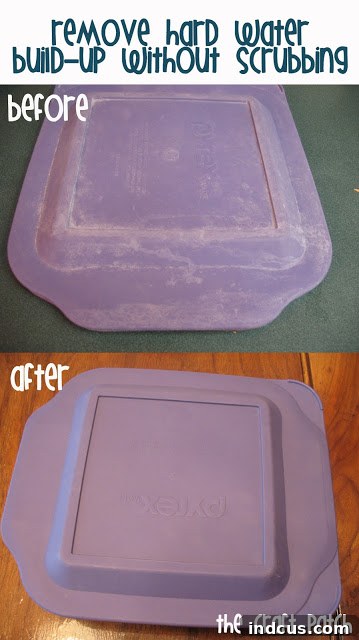
While I regret not capturing the truly dramatic “before” photos of my initial batch of dishes—they went from SO crusty to SO clean it was genuinely shocking, like a magic trick performed right in my sink—I do have a few examples of items that somehow evaded that first, transformative vinegar soak. These pieces, though perhaps not as spectacularly crusty as the initial lot, still clearly illustrate the power of this simple method. Remember, not even one bit of scrubbing was involved here; it was purely the power of the soak that brought about this remarkable change. These images, though a humble representation, will hopefully give you a clear idea of the incredible restoration potential that awaits your own hard water-stained kitchenware.
Final Thoughts: Embrace the Vinegar Revolution for a Sparkling Home
The battle against hard water stains on dishes can often feel like a losing one, leading to frustration and the unnecessary replacement of otherwise perfectly good kitchenware. However, as this experience profoundly demonstrated, the solution doesn’t have to be complicated or costly. A simple, overnight soak in hot water and white vinegar can achieve truly astonishing results, transforming dull, crusty, and embarrassing dishes into sparkling, pristine pieces you’ll be proud to use and display. It’s a testament to the effectiveness of natural cleaning solutions and a gentle reminder that sometimes, the best remedies are found in the simplest of household staples.
So, if you’re tired of cloudy glasses and streaky plates, don’t despair. Give this cheap, easy, and incredibly effective vinegar soak a try. You’ll be amazed at the transformation, and your dishes will thank you for it. Say goodbye to hard water woes and hello to a kitchen full of glistening, truly clean dishes!