My First Cable Knit Baby Blanket: A Journey from Beginner to Knitter
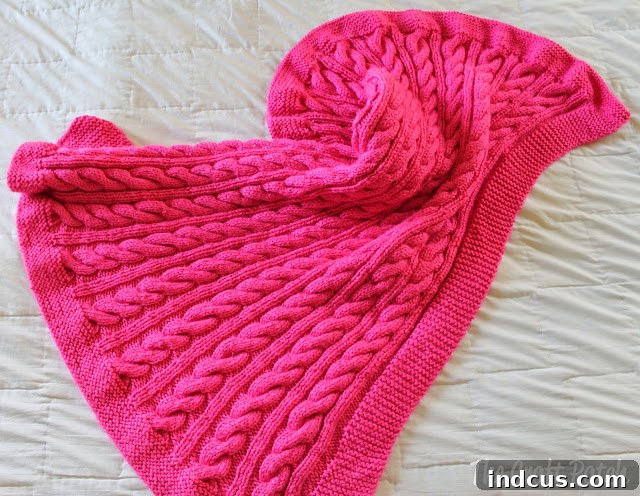
What an incredible feeling! After months of dedication, patience, and a healthy dose of learning, I’ve finally completed my very first significant knitting project: a beautiful, cozy cable knit baby blanket. This project isn’t just a blanket; it’s a tangible representation of a new skill learned, a challenge overcome, and a labor of love for my soon-to-arrive baby girl. The journey began on Valentine’s Day, a truly special day when an ultrasound revealed we were expecting a daughter. Seven months later, as I hold this finished blanket, the anticipation and joy are palpable. Here she is, in all her cable-knit glory:
Choosing the Perfect Project: The Luca Baby Blanket Pattern
Selecting the right project for my inaugural knitting adventure was crucial. I wanted something meaningful, practical, and beautiful—an heirloom piece that would be cherished for years. A baby blanket perfectly fit the bill. After some research, I stumbled upon the “Luca” baby blanket pattern, and its intricate yet classic cable design immediately captured my heart. While it looked daunting for a complete novice, I was determined to rise to the challenge. The pattern is widely available and well-loved, making it an excellent choice for those looking for a rewarding knitting project.
I sourced the Luca baby blanket pattern from two fantastic platforms: first, The Cake Plate blog, which provides clear instructions, and second, Ravelry, an invaluable resource for knitters and crocheters alike, offering a vast library of patterns, community forums, and project inspiration. For my specific creation, I opted for US8/5mm circular needles. Circular needles are a game-changer for larger projects like blankets, as they comfortably hold a multitude of stitches without the strain on your wrists that straight needles can cause. They also make the project more portable, allowing you to work on it almost anywhere.
For the yarn, I chose Caron Simply Soft, renowned for its incredible softness and durability, making it an ideal choice for baby items that will endure frequent washes. I specifically selected the hottest pink color available, a vibrant and cheerful hue that perfectly matched my excitement for welcoming a baby girl. The blend of this soft yarn with the intricate cable pattern creates a blanket that is both visually stunning and incredibly comforting. The weight and drape of Caron Simply Soft also highlight the beautiful texture of the cables, making each twist and turn stand out.
From Zero to Cabling Hero: My Knitting Education
As I mentioned, this wasn’t just my first cable knit project; it was my very first knitting project, period. When I cast on those first stitches, I didn’t even know the difference between a knit stitch and a purl stitch, let alone how to execute complex cables. It felt like learning a whole new language, but the desire to create something special for my daughter fueled my determination. Thankfully, in this digital age, help is just a click away! YouTube quickly became my personal knitting tutor.
I spent hours watching tutorials, pausing, rewinding, and practicing until the basic knit and purl stitches became second nature. Then came the real challenge: cabling. The Luca pattern prominently features the C8B cable, which stands for “cable 8 back.” This specific cable involves manipulating eight stitches to create that distinctive twisted rope effect. It seemed incredibly complex at first glance, but a fantastic video (similar to this one) broke it down into manageable steps, transforming me from a bewildered beginner into what felt like a cabling pro.
Let me break down the C8B for any fellow beginners out there. This technique is fundamental to many cable patterns and, once mastered, opens up a world of possibilities. To execute a C8B cable, you start by slipping four stitches onto a cable needle. A cable needle is a small, usually bent needle, specifically designed to hold stitches temporarily. Once those four stitches are on the cable needle, you move them to the back of your work. This is crucial for creating the “twist.” Next, you knit the next four stitches directly from your main left-hand needle. After knitting those four, you then take the four stitches you had previously slipped onto the cable needle, return them to your original left-hand needle (or knit them directly from the cable needle, depending on your preference and the specific technique you’re learning), and knit those four stitches. The magic happens as these stitches, which were held in the back, cross over the ones you just knit, creating that beautiful, intertwining cable shape. It’s a rhythmic process that becomes incredibly satisfying once you get the hang of it.
My Secret Weapon: The Color-Coded Chart for Row Tracking
One of the most significant challenges I encountered during this extensive project was simply keeping track of my rows, particularly ensuring that I cabled at precisely the right intervals. Cable patterns often require you to knit a certain number of plain rows between each cable repeat, and losing count could mean unraveling hours of work. Early on, I realized that simply trying to remember or making mental notes wouldn’t suffice for a project of this scale and complexity. I needed a foolproof system.
My solution was a simple yet incredibly effective color-coded chart. I mapped out the pattern repeats on a piece of paper, using different colored pens to designate the plain rows and the cable rows. Each time I completed a row, I would cross it off with a satisfying line. This visual tracker was a lifesaver. It not only prevented errors but also gave me a clear sense of progress, motivating me through the longer sections. This technique is something I highly recommend to any knitter tackling a repetitive or complex pattern, as it minimizes frustration and maximizes accuracy. Whether it’s a simple tally or a detailed color-coded diagram, having a tangible way to mark your progress makes a huge difference in staying on track and preventing mistakes.
Knitting vs. Crochet: A Newfound Love and Crafting Versatility
This entire experience has been incredibly rewarding, not just for the finished blanket but for the joy of learning how to knit. As someone who has always enjoyed crochet, delving into knitting felt like exploring a parallel universe of fiber arts. While both crafts use yarn and needles (or hooks) to create fabric, their fundamental construction and resulting textures are surprisingly different, and I’ve truly fallen in love with knitting’s unique characteristics.
Knitting, to me, feels inherently more like fabric. It’s constructed from interconnected loops, which gives it a wonderful elasticity and drape. This looping structure results in a material that is often stretchier, softer, and more fluid, making it perfect for garments, flowing shawls, and, of course, cuddly baby blankets. The textures you can achieve with knitting, from delicate lace to robust cables, often have a refined, classic appearance. However, knitting tends to be slower than crochet, especially for beginners. Each stitch typically relies on the integrity of the previous row, and dropped stitches can be a bit trickier to fix, requiring careful attention.
Crochet, on the other hand, is built from a series of knots. This creates a denser, often sturdier fabric that can be worked up very quickly. Crochet stitches are independent of each other, making it easier to correct mistakes and lending itself well to intricate lace patterns, amigurumi (stuffed toys), and projects that require more structure. While it’s faster and often considered easier for beginners to grasp the basics, the resulting fabric is less elastic and can sometimes feel more rigid compared to knitwear. The “knots” create a distinct texture that is beautiful in its own right, often resembling various forms of lace or a more sculptural textile.
Having experienced both, I’m genuinely glad to possess the versatility of doing both. Each craft has its strengths and best applications. For projects requiring warmth, drape, and a classic fabric feel, knitting is my new go-to. For quick projects, intricate openwork, or structural pieces, crochet remains a beloved choice. This newfound appreciation for knitting has broadened my crafting horizons immensely, and I now see endless possibilities for future projects.
What’s Next? My Future Knitting Aspirations
Completing this cable knit baby blanket has filled me with an immense sense of accomplishment and has ignited a true passion for knitting. The process, from grappling with basic stitches to mastering the elegant cable, has been an incredibly fulfilling creative journey. I’m already envisioning my next knitting adventure. Perhaps a cozy scarf, a delicate pair of baby booties, or even venturing into knitting a simple garment like a cardigan. The world of knitting is vast and full of exciting possibilities, and I’m eager to continue learning new techniques and exploring different patterns and yarns.
This project has shown me that with a little patience, determination, and the right resources, anyone can pick up a new craft and create something truly beautiful. If you’ve been contemplating learning to knit, I wholeheartedly encourage you to take the plunge. The satisfaction of transforming a skein of yarn into a tangible, cherished item is an experience like no other. I can’t wait to see what beautiful creations my needles will produce next!