Effortlessly Erase Stubborn Black Scratch Marks from Your Dinner Plates
There’s nothing quite as frustrating as seeing your beautiful dinner plates marred by unsightly black scratch marks. These persistent imperfections, often left behind by the relentless scraping of forks, spoons, and knives, can transform elegant dinnerware into a collection of tired, worn-out pieces. For many homeowners, including myself, these marks can be a source of constant annoyance, leading to the unfortunate conclusion that a costly replacement set is the only solution.
I know the feeling firsthand. My cherished collection of plates, once a source of pride, had gradually become covered in these peculiar dark lines. Each time I set the table, I couldn’t help but notice them, dimming the aesthetic appeal of an otherwise inviting meal. The thought of shelling out for an entirely new set of dishes loomed large, a significant expense I’d rather avoid.
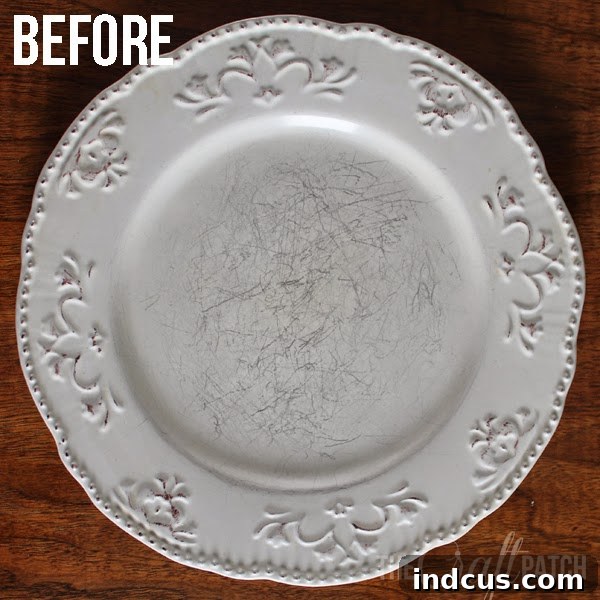
To illustrate just how pervasive this problem can be, here’s a glimpse of one of my plates before its amazing transformation:
For years, I simply accepted these black marks as a permanent fixture, an inevitable consequence of daily use. I believed they were deep scratches etched into the ceramic or porcelain, irreversibly damaging the surface. It wasn’t until a serendipitous encounter with a promising tip on Pinterest that my perspective began to shift. The idea that these “permanent” marks could actually be removed seemed almost too good to be true, yet it sparked a glimmer of hope that saved my dinnerware from the landfill.
Intrigued and desperate for a solution that didn’t involve buying all new plates, I decided to investigate further. The secret, according to the online wisdom, lay in a widely available household cleaning product. A quick trip to my local Walmart confirmed its accessibility: Bar Keeper’s Friend. Given that it was a fraction of the cost of a new dinner set, I was more than willing to give this mysterious powder a chance. What did I have to lose?
Before diving into the cleaning process, it’s worth understanding *what* these black marks actually are. Contrary to popular belief, they are rarely true scratches that penetrate the glaze of your plates. Instead, they are typically microscopic deposits of metal from your stainless steel silverware that have transferred onto the surface of your ceramic or porcelain dinnerware. When forks, knives, and spoons scrape against the plate, tiny particles of metal wear off and adhere to the plate’s surface, creating those dark, streaky lines. This crucial distinction is why conventional scrubbing or dish soap often fails to remove them, but a specialized cleaner can work wonders.
Here’s a visual of the humble yet powerful product that would soon revolutionize my dish-cleaning routine:

The Simple Steps to Restore Your Dinnerware’s Luster
The application process was remarkably straightforward, requiring minimal effort and no specialized tools. Here’s how I tackled those stubborn marks:
- Gather Your Supplies: You’ll need Bar Keeper’s Friend (the powdered cleanser is excellent for this task), a damp sponge, and your scratched dinner plates.
- Apply the Cleanser: Sprinkle a small amount of Bar Keeper’s Friend powder directly onto the affected areas of your plate. You don’t need a huge mound; a light dusting is usually sufficient to cover the marks.
- Dampen and Scrub: Take a wet sponge and gently, yet firmly, begin to scrub the areas where you applied the powder. Use circular motions. You’ll notice almost immediately that the black marks begin to lift and disappear.
- Observe the Magic: As you scrub, the transformation is truly astonishing. The metal deposits, which once seemed inextricably fused to the plate, vanish as if by magic. I didn’t even have to scrub with excessive force; a steady, moderate pressure was all it took.
- Rinse Thoroughly: Once the marks are gone, rinse your plate thoroughly under running water to remove all traces of the cleanser. Dry it with a clean cloth, and behold your restored dinnerware!
The speed and effectiveness of this method left me utterly dumbfounded. Those “permanent” black marks dissipated as quickly and cleanly as a magician’s trick, leaving behind a pristine, white surface. I was genuinely shocked by the results – and in the best possible way!
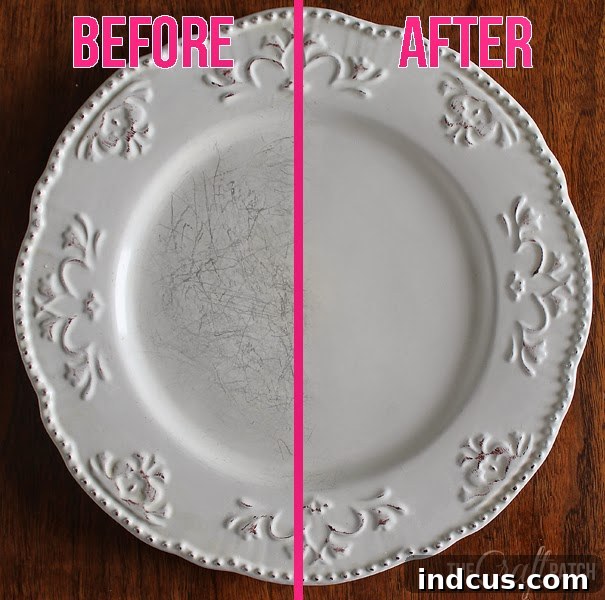
Witnessing the immediate improvement was incredibly satisfying. Seriously, I didn’t have to put in any back-breaking effort! Here’s undeniable proof of how effectively this method revitalized my plate:
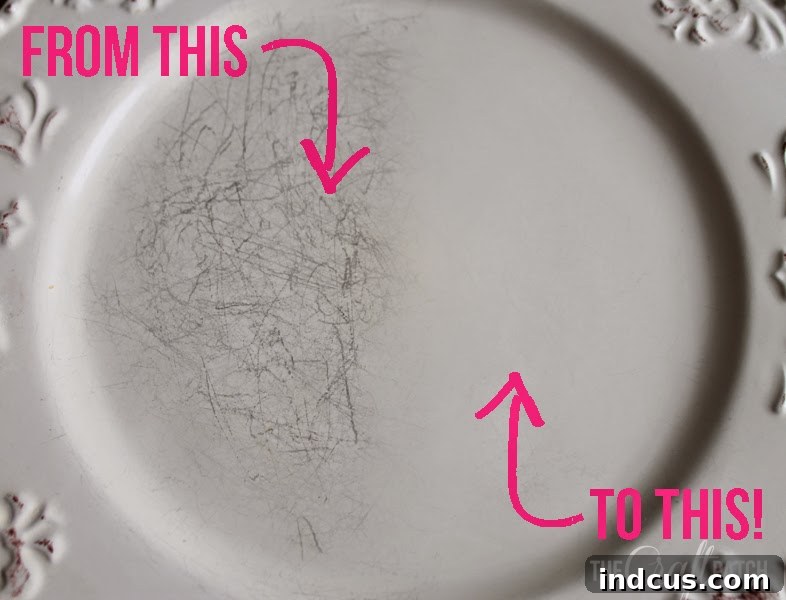
My dishes now gleam as if they’re brand new! The feeling of reclaiming their original beauty was immense. I couldn’t wait for my husband to return home, eager to see if he would notice the striking difference. How could he not, I mean, come on! Just look at that incredible before-and-after comparison:
Beyond Plates: The Versatility of Bar Keeper’s Friend
Discovering this cleaning hack didn’t just save my dinner plates; it opened up a whole new world of possibilities for tackling other household cleaning challenges. In the past, I’d often pass up beautiful, yet slightly scratched, dinnerware at thrift stores, believing their imperfections were irreparable. Not anymore! This revelation has empowered me to embrace vintage finds and budget-friendly treasures, knowing I can restore their charm with ease. It’s a game-changer for sustainable living and saving money.
But the utility of Bar Keeper’s Friend extends far beyond just ceramic plates. Its gentle abrasive and oxalic acid formulation make it a powerhouse for a multitude of cleaning tasks around the home:
- White Porcelain Sinks: Its ability to remove metal marks and rust stains makes it perfect for restoring the pristine brightness of white porcelain sinks. Say goodbye to those stubborn coffee rings and dull spots.
- Hard Water Build-up: Those cloudy, dull drinking glasses plagued by hard water deposits? A gentle scrub with BKF can often bring back their sparkling clarity.
- Glass Cooktops: For cooked-on spills and minor scuffs on glass and ceramic cooktops, it can work wonders. Always test in an inconspicuous area and use a soft sponge to avoid scratching.
- Bathtubs and Showers: It excels at removing soap scum, mineral deposits, and rust stains from porcelain, fiberglass, and even some acrylic tubs and showers.
- Stainless Steel Surfaces: From sinks to pots and pans, Bar Keeper’s Friend is renowned for polishing stainless steel, removing heat tint, rust spots, and restoring its original shine.
- Tile and Grout: It can help lift grime and stains from tile surfaces and brighten discolored grout lines.
- Crockpots: Just like dinner plates, many crockpot inserts develop similar black scratch marks from utensils. This cleaner is equally effective in restoring their interior.
Truly, this stuff feels like magic, transforming old and dingy surfaces into sparkling clean ones with minimal effort. I’m already planning a comprehensive cleaning spree throughout my house, eager to put this versatile product to the test on various surfaces.
Choosing the Right Formula: Powder vs. Soft Scrub Liquid
While I initially used the classic powdered Bar Keeper’s Friend, it’s worth noting that the product also comes in a soft scrub liquid formula. This liquid version is often recommended for more delicate surfaces or when you prefer a less abrasive application. Regardless of the formula you choose, it’s always wise to heed the manufacturer’s instructions.
The packaging on Bar Keeper’s Friend products consistently advises users to test the product in a hidden or inconspicuous area the first time you use it on anything, especially if the item is valuable, antique, or made of a unique or sensitive material. This precautionary step ensures that the cleaner won’t cause any discoloration or damage to your specific surface.
Long-Term Care and Considerations
While the immediate results are undeniably impressive, some readers have shared feedback that very frequent or aggressive use of abrasive cleansers like Bar Keeper’s Friend can, over a prolonged period, potentially dull the shine of certain dishware surfaces. This is an important consideration for maintaining the longevity of your items.
However, for plates like mine, which I had already deemed a “lost cause” and was ready to replace, this minor potential drawback is far outweighed by the significant benefit. Using Bar Keeper’s Friend effectively extended the life of my dishes by a substantial margin, making it an undeniable win in my book. The cost savings alone are incredible. My recommendation would be to use it judiciously – perhaps not scrubbing your entire porcelain sink with it every single day, but rather as needed for stubborn stains and marks.
To further prevent the reoccurrence of black marks, consider adopting gentle practices when handling your dinnerware. Avoid scraping utensils forcefully across plates, and when stacking, you might place a paper towel or thin felt pad between plates to prevent friction, especially if they are heavily used or valuable.
In conclusion, this straightforward method for erasing black scratch marks from dinner plates is undoubtedly a winning life hack. It’s affordable, effective, and incredibly satisfying. Say goodbye to ugly dishes and hello to a revitalized kitchen! Boo yah!
Explore more clever life hacks and essential cleaning tips here.