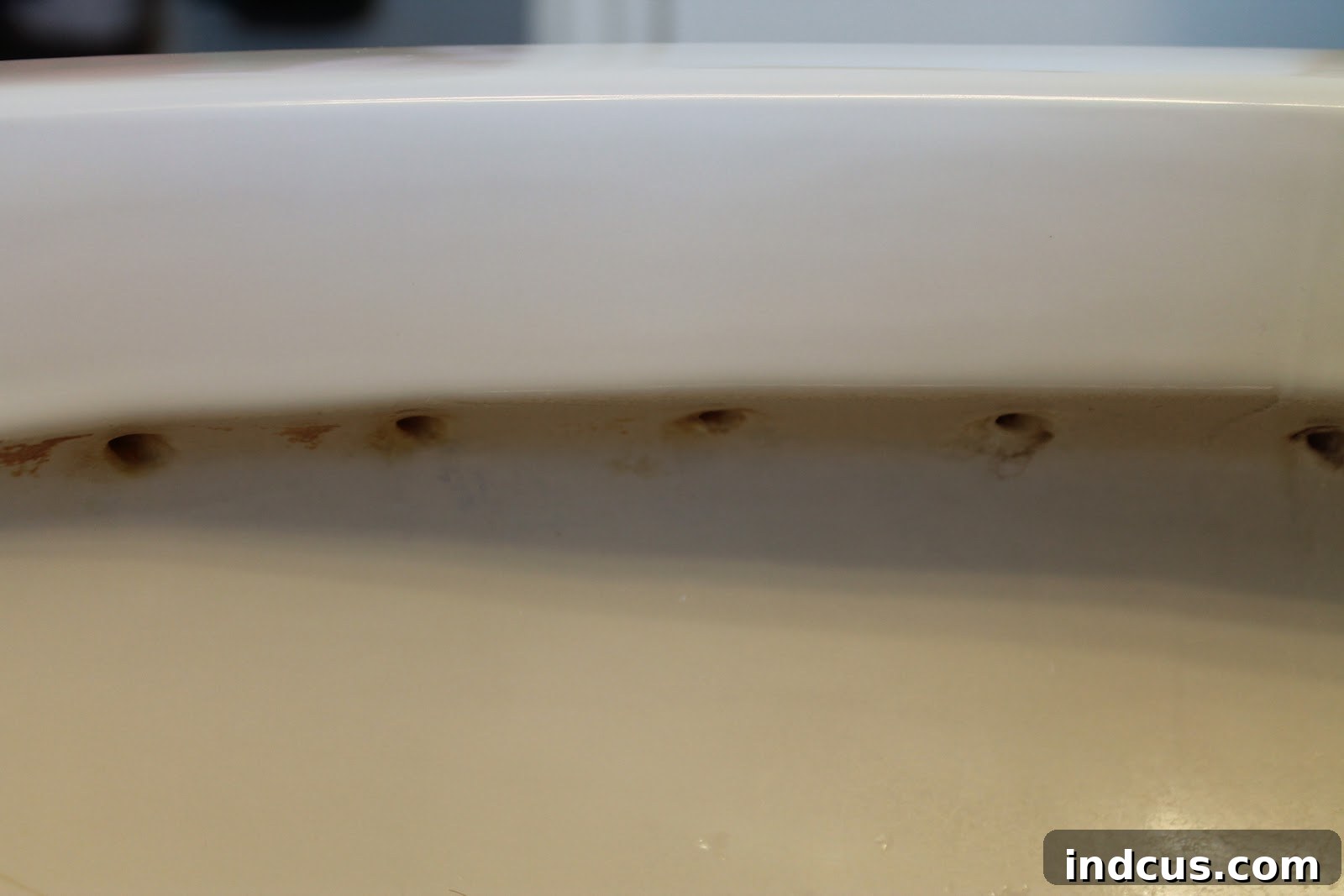
The Ultimate Guide to Deep Cleaning Your Toilet Rim: Banishing Stubborn Hard Water Stains
Please note: This article contains images of a real toilet before and after cleaning. While necessary to demonstrate the effectiveness of the method, viewer discretion is advised if you find such images unsettling.
The Persistent Problem: Hard Water Buildup in Your Toilet
Every homeowner or renter knows the struggle: keeping a toilet truly pristine. While the bowl and exterior are often easy enough to scrub clean with standard products, there’s one area that consistently proves to be a formidable adversary – the inside of the toilet rim. This hidden ledge, where water cascades into the bowl with every flush, is a notorious breeding ground for unsightly and stubborn hard water stains and mineral deposits. These aren’t just an aesthetic concern; they can harbor bacteria and contribute to an overall less sanitary bathroom environment.
For those living in older homes, or especially in rental properties like mine, this problem is often exacerbated. Years of neglect, varying water quality, and general wear and tear can leave behind layers of caked-on grime that seem impervious to conventional cleaning efforts. You can scrub, spray, and soak, but those calcified rings and mineral crusts around the flush holes just won’t budge. This persistent issue was exactly what motivated me to seek out a more aggressive, yet surprisingly simple, solution.
Understanding the Enemy: What Causes Those Stubborn Stains?
Before diving into the solution, it’s helpful to understand what we’re up against. Hard water, prevalent in many regions, is rich in minerals like calcium and magnesium. When this water repeatedly flows through the toilet rim and then evaporates, it leaves these mineral deposits behind. Over time, these layers build up, creating a rough, often yellowish or brownish crust that is highly resistant to typical toilet bowl cleaners. The unique, enclosed shape of the rim makes it difficult to reach these areas effectively with brushes or sponges, allowing the buildup to become even more entrenched.
Traditional cleaners often rely on agitation (scrubbing) or mild acids to break down stains. However, the mineral deposits in the toilet rim are often so thick and protected from direct scrubbing that these methods fall short. The challenge lies in finding a way to allow a powerful cleaning agent to sit directly on these stains for an extended period, effectively dissolving them without constant manual effort.
The Eureka Moment: Inspired by Grout Cleaning Success
My journey to a sparkling toilet rim was actually inspired by a prior cleaning triumph. A while back, I successfully tackled persistent mold in grout lines using a similar targeted application method (you can read more about that here). The principle was simple: a powerful cleaning agent applied directly to the problem area and left to dwell. This experience got me thinking: could the same targeted approach work for the deeply entrenched hard water stains and mineral deposits lurking within the toilet rim?
The idea was to find a way to make a strong cleaner adhere to the curved, often porous surface of the rim, specifically targeting the flush holes where the most severe buildup occurs. After some contemplation, the humble cotton ball emerged as the perfect tool for this task. Its absorbent nature and flexibility make it ideal for molding into tight spaces and holding a cleaning solution against the stain.
Gather Your Arsenal: What You’ll Need
Preparing for this deep cleaning task is straightforward. You’ll only need a few readily available items:
- Household Bleach: A potent disinfectant and stain remover. Ensure it’s plain bleach, not a splash-less or gel variety, as you want maximum saturation of the cotton.
- Cotton Balls: Standard cotton balls work best. You’ll need enough to cover all the affected holes in your toilet rim.
- Rubber Gloves: Essential for protecting your hands from bleach.
- “Do Not Use” Sign (Optional but Highly Recommended): A simple note or sign to prevent accidental flushes while the bleach is working its magic. This is particularly important in shared bathrooms.
- Safety Goggles (Recommended): To protect your eyes from accidental splashes.
- Good Ventilation: Ensure the bathroom is well-ventilated by opening a window or running the exhaust fan.
Step-by-Step: Unleashing the Power of Bleach-Soaked Cotton Balls
Here’s how to execute this remarkably effective toilet deep cleaning method:
Step 1: Preparation and Safety First
Before you begin, don your rubber gloves and safety goggles. Open a window or turn on the bathroom fan to ensure adequate ventilation. It’s crucial to work in a well-ventilated area when using bleach to avoid inhaling fumes. Briefly flush the toilet to ensure the rim is wet, which can help the cotton balls adhere better.
Step 2: Saturate the Cotton Balls
Take several cotton balls and generously soak them in undiluted household bleach. You want them to be thoroughly saturated, but not dripping excessively. The goal is for the cotton to act as a carrier for the bleach, holding it directly against the stained areas.
Step 3: Apply to the Rim Holes
Carefully press the bleach-soaked cotton balls firmly against each individual flush hole and any other areas of stubborn hard water buildup along the inside of the toilet rim. The damp cotton should adhere well to the porcelain surface. Ensure maximum contact between the bleach-soaked cotton and the stains. Don’t be afraid to use multiple cotton balls if necessary to cover all the affected spots.
Step 4: The Waiting Game
Once all the cotton balls are in place, leave them to work their magic for at least four to five hours. For exceptionally tough stains, you might consider leaving them overnight (up to 8 hours). During this time, it’s absolutely crucial that the toilet is not used. Place a clear “NO! Do not use this toilet!” sign on the toilet seat or lid to prevent accidental flushing, especially if you share your home with others. The longer the bleach has contact with the stains, the more effectively it will break them down.
Step 5: Reveal and Rinse
After the designated waiting period, carefully remove the cotton balls, still wearing your gloves. You should immediately notice a dramatic difference. The stains, which once seemed impossible to remove, should now be significantly diminished or completely gone. Flush the toilet several times to rinse away any residual bleach and dislodged debris. You can also give the area a quick scrub with a toilet brush at this stage, though you’ll likely find very little resistance.
The Astonishing Results: A Toilet Reborn
The transformation is truly remarkable. Peeling back those cotton balls to reveal a sparkling clean, stain-free toilet rim is incredibly satisfying. Gone are the unsightly mineral crusts and the dingy appearance. The flush holes, once choked with buildup, are now clear, potentially improving water flow and flush efficiency. Beyond the visual appeal, the bathroom also benefits from a clean, fresh scent, a stark contrast to the lingering staleness that can accompany persistent grime.
This method delivers a deep clean that traditional scrubbing simply cannot achieve in such a difficult-to-reach area. The direct, prolonged contact of the bleach works wonders on even the most ancient and stubborn hard water deposits, leaving your toilet looking almost new again. It’s a testament to the power of targeted cleaning and a simple, effective technique.
Why This Method is So Effective for Toilet Rim Cleaning
The success of the bleach-soaked cotton ball method lies in a few key factors:
- Targeted Application: Unlike pouring cleaner into the bowl, which dilutes quickly and mostly bypasses the rim, cotton balls deliver the cleaning agent directly to the problem spots.
- Extended Dwell Time: The cotton holds the bleach against the stains for hours, allowing it to penetrate and break down mineral deposits and organic matter more effectively than a quick scrub.
- Bleach’s Power: Bleach (sodium hypochlorite) is a strong oxidizing agent. It chemically reacts with organic stains and, to a lesser extent, can help break down some mineral deposits, particularly those discolored by organic compounds (like mildew or rust). Its primary role here is to disinfect and powerfully whiten and remove the toughest stains.
- Mechanical Adhesion: The cotton physically sticks to the porcelain, ensuring continuous contact without drying out too quickly.
Maintaining a Pristine Toilet: Prevention is Key
Once you’ve achieved this level of cleanliness, you’ll want to maintain it! Here are a few tips to prevent severe hard water buildup from returning:
- Regular Cleaning: Incorporate a quick swipe under the rim with a toilet brush during your weekly cleaning routine.
- Vinegar Flushes: Occasionally pour a cup or two of white vinegar into the toilet bowl and let it sit for 30 minutes to an hour before flushing. Vinegar is a mild acid that can help dissolve mineral deposits.
- Toilet Bowl Cleaners with Descalers: Use toilet bowl cleaners specifically formulated to combat hard water and lime scale.
- Consider a Water Softener: If hard water is a pervasive problem throughout your home, a whole-house water softener can significantly reduce mineral buildup not just in your toilet, but in all your fixtures and appliances.
- Monthly Check-up: Inspect the toilet rim monthly. If you see early signs of buildup, you can repeat the bleach cotton ball method as a preventative measure before it becomes severe.
Safety Considerations When Using Bleach
While highly effective, bleach is a powerful chemical and must be handled with care:
- Ventilation is Non-Negotiable: Always ensure the area is well-ventilated to avoid inhaling fumes.
- Wear Protective Gear: Gloves are a must. Eye protection is strongly recommended.
- Never Mix Bleach: Absolutely DO NOT mix bleach with other cleaning products, especially those containing ammonia (like some window cleaners) or acids (like vinegar or some toilet bowl cleaners). Mixing bleach with these can create highly toxic gases that are extremely dangerous and potentially fatal.
- Keep Away from Children and Pets: Store bleach securely out of reach.
- Test in an Inconspicuous Area: While porcelain toilets are generally safe with bleach, if you have an unusual toilet material, test a small, hidden spot first.
- Dispose of Cotton Balls Safely: After use, flush the toilet to dilute the bleach, then dispose of the cotton balls in the trash.
Conclusion: Reclaim Your Restroom’s Radiance
Battling stubborn toilet rim stains can feel like a losing battle, but with the right technique, victory is well within reach. This simple yet highly effective method using bleach-soaked cotton balls offers a powerful solution to deep clean those elusive hard water deposits and mineral crusts. By allowing the cleaning agent prolonged, direct contact with the problem areas, you can transform a neglected and unsightly toilet into a gleaming, hygienic fixture.
So, the next time those stubborn stains start to reappear, don’t despair. Gather your supplies, follow these steps, and prepare to be amazed by the renewed freshness and pristine appearance of your toilet. Say goodbye to nasty buildup and hello to a truly clean bathroom!