Pinterest Tested: Unmasking the Truth Behind Viral DIY Claims
Welcome to Pinterest Tested! In an age where our feeds are flooded with ingenious hacks, breathtaking recipes, and seemingly miraculous DIY solutions, it’s easy to get swept away by the allure of a clever Pin. But ever wonder if that “miracle cleaner” truly works wonders, or if that homemade facial cleanser will leave your skin glowing, or if that delicious-looking recipe tastes as good as it appears? That’s precisely what we’re here to find out!
Our mission at Pinterest Tested is simple yet crucial: to put popular Pins to the ultimate test. We dive deep into those captivating claims, gathering ingredients, rolling up our sleeves, and meticulously following instructions to see if they genuinely live up to their promises. Consider us the Mythbusters of Domesticity, saving you time, money, and potential disappointment one Pin at a time. If it catches our eye, we’re testing it!

The Pin Under Scrutiny: The Glowing Mountain Dew Experiment
Today, we’re tackling a Pin that has captured the imagination of many, promising a dazzling display of luminescence with just a few common household items. The claim is simple, yet incredibly captivating: turn an ordinary bottle of Mountain Dew into a glow-in-the-dark marvel. Who wouldn’t want to light up their night with a homemade, glowing beverage?
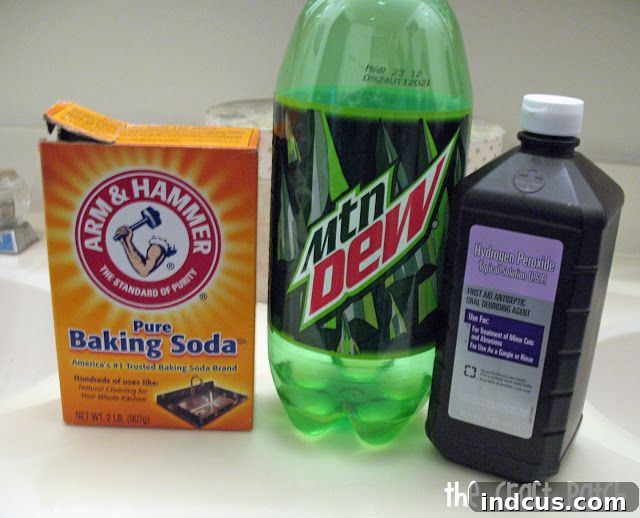
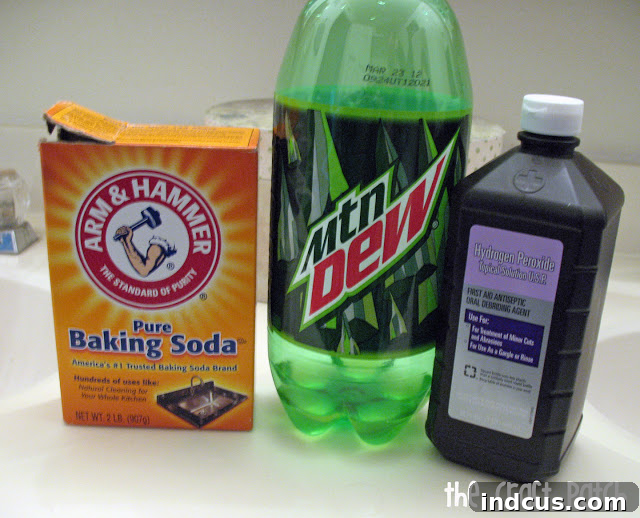
The Pin, titled “Glowing Mountain Dew,” suggests a surprisingly straightforward recipe:
- A tiny bit of baking soda
- Three capfuls of hydrogen peroxide
- Approximately a 1/4 inch of Mountain Dew
Combine these, give it a shake, and voila! The bottle is supposed to light up “like a lightbulb.” The visual appeal of such an experiment is undeniable, especially for those looking for a fun, easy, and cheap science project or a unique party trick. But can something so simple truly yield such spectacular results?
The Grand Experiment: Can Mountain Dew Really Glow?
The Test Question: Does it work? Can I really make Mountain Dew glow in the dark with just baking soda and hydrogen peroxide? Our curiosity was piqued, and the promise of a glowing soda bottle was too intriguing to pass up. We set out to replicate the Pin’s instructions with precision and an open mind, hoping to discover a new, magical DIY trick.
Gathering the ingredients was simple enough. A fresh 2-liter bottle of Mountain Dew (a beverage we rarely consume, but more on that later), a box of baking soda from the pantry, and a bottle of hydrogen peroxide from the medicine cabinet were all that stood between us and potential glowing glory. The children, always eager for a hands-on experiment, were particularly excited, their imaginations already conjuring images of a vibrant, luminous bottle.
Setting the Scene and Mixing the Magic
With our ingredients at the ready, the anticipation in our “laboratory” (our bathroom, for maximum darkness) was palpable. We carefully measured out the 1/4 inch of Mountain Dew, which seemed like a surprisingly small amount. Then came the baking soda – “a tiny bit,” as the Pin instructed, which we interpreted as about a quarter teaspoon, erring on the side of caution not to overdo it. Finally, three capfuls of hydrogen peroxide were added to the mix. The ingredients swirled together, a mundane concoction that held the promise of something extraordinary.
We sealed the bottle, took a deep breath, and then the real work began. With the lights switched off, plunging the room into complete darkness, my kids and I shook that bottle as hard as we possibly could. We shook it up, we shook it down, we swirled it, we vigorously agitated the contents, all while our eyes were glued to the bottle, searching for any flicker, any hint of the promised luminescence. The silence of the dark bathroom was broken only by the sloshing of the liquid and the hopeful murmurs of expectation.
The Verdict: A Dazzling Disappointment
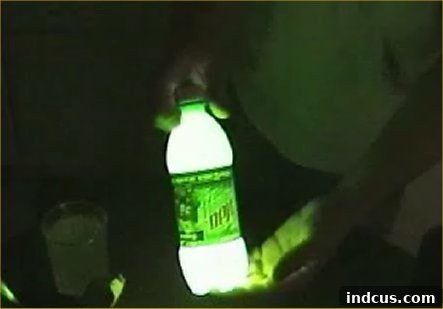
The Results: Well, as they say, a picture is worth a thousand words. In this case, the lack of light in the accompanying images speaks volumes. The Mountain Dew did not glow. Not one bit. Despite our enthusiastic shaking and hopeful waiting, the bottle remained stubbornly dark, an ordinary container of soda mixture in the dark, completely devoid of any light. This Pin, unfortunately, is a total hoax!
The immediate feeling was one of slight disappointment, though I must confess, I wasn’t entirely surprised. The claim felt just a touch too fantastical, too good to be true, even for the most optimistic DIY enthusiast. It was simply too strange to be real, defying basic expectations of chemical reactions without more potent or specialized components. The children, initially vibrant with excitement, also shared in the deflated mood, their hopes of a magical glow quickly extinguished.
Persistent Efforts, Unchanged Outcome
Being a thorough tester, I wasn’t ready to give up after just one attempt. Perhaps our proportions were slightly off? Or maybe we didn’t shake it enough? I decided to try again, not just once, but four or five more times, experimenting with slightly different ratios of baking soda and hydrogen peroxide. Maybe a little more baking soda, a little less peroxide, or vice-versa? Each time, we repeated the ritual: mix, shake, plunge into darkness, and hope. Each time, the result was consistently the same: absolutely nothing.
Even after our rigorous testing, I left the concoction in the dark for an extended period. I returned 10 minutes later, then 20, then even an hour, hoping that perhaps the reaction was a slow burn, gradually building up to a faint glow. But nope. Totally doesn’t work at all. The Mountain Dew remained obstinately opaque and unlit, proving beyond a shadow of a doubt that this particular Pinterest claim is a complete bust.

The Unfortunate Aftermath: A 2-Liter Dilemma
The biggest bummer, beyond the dashed hopes of a glow-in-the-dark marvel, is the collateral damage: a 2-liter bottle of Mountain Dew. The ironic twist? No one in our house actually drinks Mountain Dew! It was purchased solely for the purpose of this experiment, a testament to our dedication to Pinterest testing. Now, we’re left with a sugary, neon-green beverage that will likely sit in the fridge, an enduring monument to a failed DIY project.
Lessons Learned: The Importance of Pinterest Tested
Oh, well. You win some, you lose some. This is the reality of testing viral internet claims. While some Pins genuinely deliver on their promises, others, like our glowing Mountain Dew experiment, turn out to be nothing more than engaging illusions. This is precisely why Pinterest Tested exists: to navigate the vast ocean of online DIYs, separating the gems from the duds so you don’t have to waste your time, effort, or precious resources (like that 2-liter of soda!).
Our journey with the glowing Mountain Dew serves as a valuable reminder that not everything shiny on the internet truly glows. It highlights the importance of critical thinking and a healthy dose of skepticism when encountering seemingly magical solutions. While the experiment itself was a bust, the process was a fun, albeit disappointing, learning experience for both me and the kids.
On a lighter note, maybe this isn’t the end for our leftover Mountain Dew. Perhaps I can now look on Pinterest to see what else Mountain Dew is good for. Haha! Who knows, maybe there’s a Pin out there for a delicious Mountain Dew-infused cake or a unique cleaning hack that *actually* works. The testing never truly stops!
CLICK HERE to explore more Pinterest tests and join us in our quest to bust myths and uncover truths!