Welcome to “Kitchen Truths Uncovered,” where we delve into the world of popular home hacks and put them to the ultimate test! Ever scrolled through Pinterest, mesmerized by a “miracle” cleaning solution or a seemingly effortless recipe, and wondered if it actually works? You’ve come to the right place. We’re here to rigorously evaluate those eye-catching Pins, separating the genuine game-changers from the well-intentioned but ultimately ineffective advice. Think of us as the Mythbusters of modern domesticity, dedicated to bringing you honest, firsthand results.
For anyone who spends time in the kitchen, the sight of a beloved baking sheet marred by years of stubborn, baked-on grime is all too familiar. That unsightly orange-brown residue, often a byproduct of caramelization and solidified grease, can seem impossible to remove. It’s a common frustration that leads many of us down the rabbit hole of internet searches, desperate for a quick and easy fix. This week, our attention was captured by a particularly promising Pinterest hack designed to tackle this very problem.
Our featured test, inspired by this week’s Pin, promised an astonishing transformation. It showcased dramatic before-and-after photos, implying that an everyday household solution could effortlessly dissolve even the most entrenched baking sheet gunk. The claim was bold: a simple soak could restore a heavily stained baking sheet to its former glory. As always, we were skeptical yet hopeful, eager to see if this popular method truly lived up to its viral reputation.
The Challenge: Tackling Stubborn Baked-On Grime
Baking sheets are workhorses in our kitchens. From roasting vegetables to baking cookies and crisping pizzas, they endure high temperatures and frequent use. Over time, fats and oils polymerize and carbonize onto their surfaces, creating a tough, sticky layer that ordinary washing-up liquid and a sponge simply cannot budge. This build-up isn’t just an aesthetic issue; it can affect the performance of your bakeware, potentially leading to uneven cooking and transferring unwanted flavors to your food. The quest for a pristine baking sheet without hours of arduous scrubbing is a universally shared dream among home cooks.
The Pinterest Promise: Hydrogen Peroxide and Baking Soda
THE TEST: Can I effectively remove build-up from my baking sheet by soaking it in a mixture of hydrogen peroxide and baking soda?
The specific hack we put to the test suggested a powerful combination: hydrogen peroxide, a mild antiseptic and bleaching agent, paired with baking soda, a gentle abrasive and deodorizer. The theory behind this duo is that hydrogen peroxide would help to break down organic matter and lift stains, while baking soda would act as a mild abrasive and create a bubbling action, further loosening the baked-on residue. Many online sources tout this as a “natural” and “non-toxic” alternative to harsh chemical oven cleaners, making it an appealing option for those seeking eco-friendlier cleaning solutions.
To conduct our experiment, we selected a well-used baking sheet, one that had accumulated years of varied culinary adventures and bore the tell-tale signs of heavy, set-in stains. The pan presented a perfect challenge: areas of dark brown, almost black, burnt-on grease, alongside patches of lighter orange-brown discoloration. Following the instructions gleaned from the Pinterest post and similar online tutorials, we prepared the solution. First, we sprinkled a generous layer of baking soda over the entire surface of the baking sheet, ensuring comprehensive coverage, particularly on the most heavily soiled areas. Next, we carefully poured hydrogen peroxide over the baking soda, aiming for a consistent, foamy paste. The chemical reaction between the two ingredients immediately produced a gentle fizzing, which, according to the hack’s proponents, indicated the cleaning process was underway. The baking sheet was then left to soak for several hours, as recommended, to allow the solution ample time to penetrate and loosen the stubborn grime.
The Initial Revelation: Before and After
Here’s what my pan looked like before and after applying the solution and allowing it to soak:
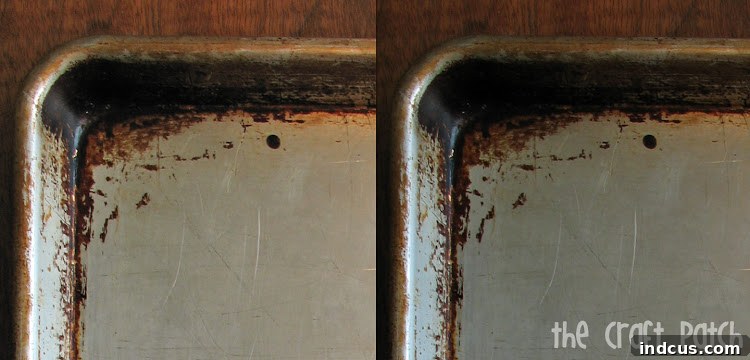
Yeah. Not much change, huh?!
As you can clearly see from the image, the results were, to put it mildly, underwhelming. After patiently waiting the recommended soaking time, we returned to the baking sheet with anticipation, only to find the “miracle” solution had barely made a dent in the ingrained stains. The thick, dark gunk remained stubbornly adhered to the pan’s surface, looking much the same as it had before the treatment. There was no magical dissolving, no effortless wipe-away moment. The expectation of a dramatically cleaner pan was met with the harsh reality of persistent grime. This observation immediately cast doubt on the efficacy of this particular Pinterest hack as a standalone solution for heavily soiled baking sheets.
The Search for a True Solution: Embracing Elbow Grease
Disappointed but not defeated, we turned to a more traditional, albeit less glamorous, method. Frustrated by the lack of progress, we reached for a tool known for its aggressive cleaning power: an SOS pad, also commonly referred to as steel wool scouring pads. These pads, infused with soap, rely on abrasive action to remove tough stains. The difference was immediate and stark. With a liberal amount of water and a significant dose of “elbow grease” – the old-fashioned term for sustained physical effort – the baked-on crud began to yield. The rhythmic scrubbing, combined with the abrasive texture of the steel wool, proved far more effective than the passive soaking method.
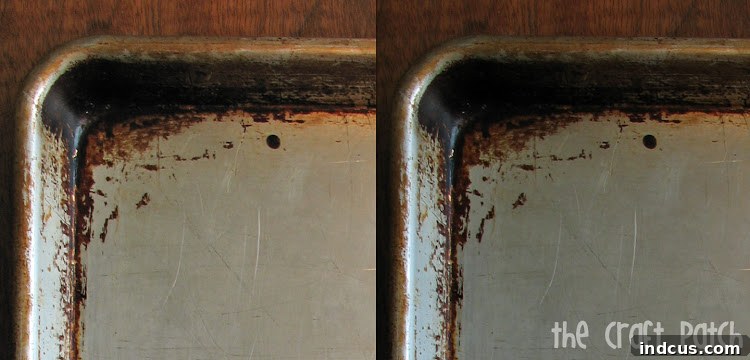
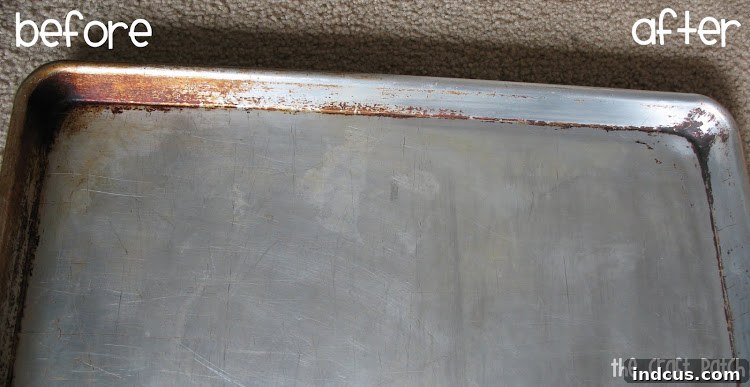
You know what worked way better? An SOS pad and a whole lot of elbow grease:
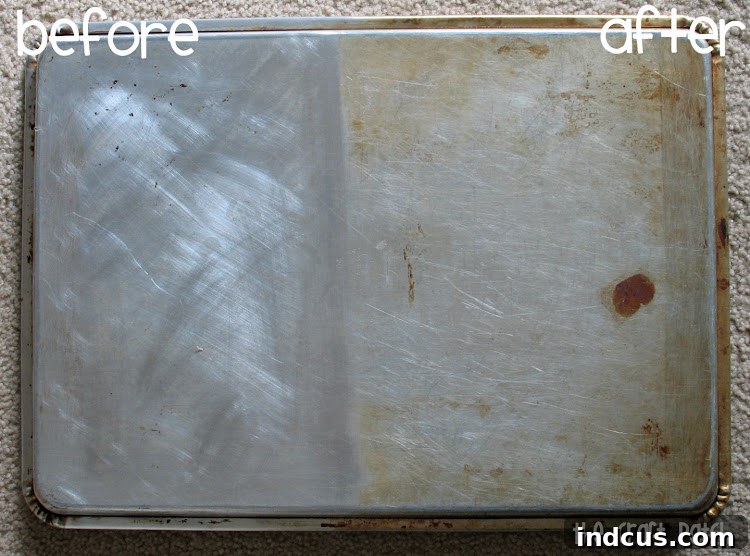
***Update: I just noticed that I put the “before” and “after” labels BACKWARDS on this picture! Obviously the nice shiny side is the “after”… sorry about that!
The images above, despite the labeling mix-up (apologies!), clearly illustrate the dramatic contrast. The shiny, significantly cleaner section of the pan is the undeniable “after” shot, a testament to the power of mechanical scrubbing. While the SOS pad does scratch the surface a bit, my pan already had numerous scratches from years of cutting brownies, homemade pizzas, and various culinary adventures directly on its surface. Therefore, a few more minor abrasions were a small price to pay for a visibly cleaner and more hygienic baking sheet. For many, the slight scratching is an acceptable trade-off for effective cleaning, especially on older, well-used bakeware.
The Verdict: Myth Debunked for Heavy Stains
THE RESULT: Bummer. The gunk did NOT magically loosen up using the hydrogen peroxide and baking soda cleaning solution. I don’t think it helped remove the build-up at all. If you want truly clean pans, especially those with years of baked-on orange-brown crud, you’re likely going to have to scrub till your arm cramps to get that orangey crud off.
Our test unequivocally demonstrates that while the hydrogen peroxide and baking soda combination might be suitable for minor stains or general surface cleaning, it is largely ineffective against deeply embedded, carbonized grease on baking sheets. The dream of a passive, effortless cleaning solution for this particular challenge remains, for now, a myth. For truly clean pans, especially those that have seen extensive use and neglected cleaning, there is simply no substitute for good old-fashioned scrubbing with an abrasive pad.
Why Do These Hacks Fall Short Sometimes?
Pinterest and other social media platforms are brimming with ingenious-looking hacks that promise to simplify our lives. Their appeal lies in the desire for quick fixes, natural alternatives, and the satisfaction of discovering a clever trick. However, the effectiveness of these hacks can vary greatly depending on the specific situation. For heavy-duty baked-on grime, which is often a result of complex chemical reactions between fats, sugars, and high heat, a simple chemical soak might not possess the necessary strength or the right type of reaction to break down the resilient bonds. Mechanical action, like that provided by steel wool, physically scrapes away the layers of accumulated residue, which is often what’s truly needed.
Beyond the SOS Pad: Other Considerations for Baking Sheet Care
While the SOS pad proved victorious in our direct comparison, it’s worth noting that other methods exist for tackling baking sheet stains, each with their own pros and cons. Some people swear by oven cleaner for a more hands-off approach, but this comes with the caveat of using harsh chemicals and requiring careful ventilation. Others advocate for natural solutions like a paste of cream of tartar and hydrogen peroxide, or a combination of vinegar and baking soda, though these often require significant scrubbing for tough stains, similar to our initial test.
Prevention is always better than cure. Using parchment paper or silicone baking mats can significantly reduce the amount of grime that accumulates on your baking sheets, making them easier to clean after each use. Prompt cleaning after baking, before residues have a chance to cool and harden, also goes a long way in maintaining their pristine condition. Regular, thorough cleaning will prevent the build-up from becoming a seemingly insurmountable problem.
Ultimately, if your baking sheets are beyond repair—deeply scratched, warped, or covered in permanent, impenetrable stains—it might be time to invest in new ones. However, for many, a good scrub can extend the life of a trusty baking sheet, saving money and reducing waste.
Conclusion: The Enduring Power of Elbow Grease
Our journey into the world of Pinterest cleaning hacks continues to be an enlightening one. While we love the idea of effortless solutions, this week’s test serves as a clear reminder that some domestic challenges still require good old-fashioned effort. The hydrogen peroxide and baking soda hack, while seemingly promising, simply didn’t stand up to the challenge of deeply entrenched baking sheet grime. The real hero, in this case, was the humble SOS pad and a healthy dose of elbow grease, proving that sometimes, the most effective solutions are also the most straightforward.
So, the next time you encounter a stubborn baking sheet stain, remember this test. While you might be tempted by the latest viral hack, don’t underestimate the power of abrasive cleaning. Keep an eye out for our next “Kitchen Truths Uncovered” experiment, where we’ll continue to put popular claims to the test, helping you navigate the endless sea of online advice with confidence. Have you tried this hack or found a different solution that works wonders? Share your experiences in the comments – we’d love to hear them!