Crafting Personalized Family Tree Pedigree Charts: A Unique and Heartfelt Gift
In a world often filled with mass-produced items, the gift of something truly personalized and handcrafted holds immeasurable value. This past Christmas, driven by a desire to give something deeply meaningful and unique, I embarked on a creative journey to design custom family tree pedigree charts for my parents and my in-laws. The inspiration for this project stemmed from an online resource that has since disappeared, but the concept of visually representing one’s heritage in an artistic way left a lasting impression. The result was a set of truly one-of-a-kind presents that beautifully captured the essence of their family histories.
These charts weren’t just lists of names; they were designed to be visual narratives, transforming abstract genealogical data into a tangible work of art. The process, while requiring a touch of creativity and patience, yielded incredibly rewarding results. Each chart became a conversation starter, a decorative piece, and a cherished heirloom, celebrating the roots from which each family grew. This project offers a wonderful opportunity to connect with your ancestry in a profound and artistic manner, making it an ideal gift for any occasion.
Visualizing Ancestry: The Artistic Concept Behind the Tree of Names
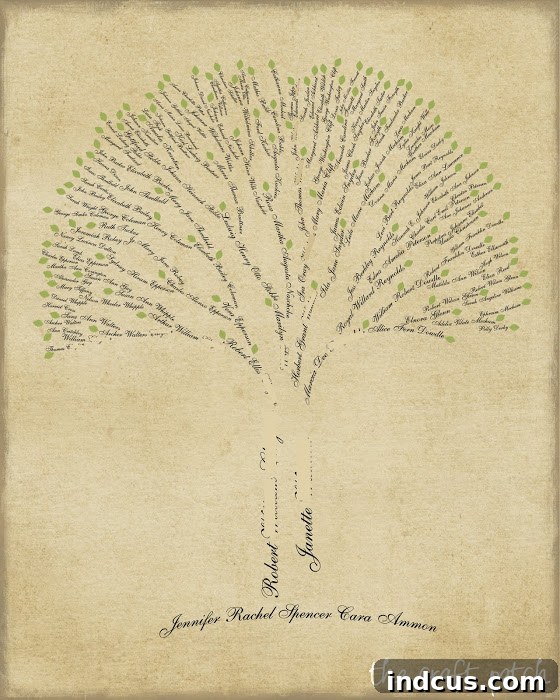
The core of this project lies in an innovative design approach: using the actual names of ancestors to form the intricate shape of a tree. This method transcends a simple diagram, creating a living, breathing representation of a family’s lineage. Here’s a glimpse into how these personalized pedigree charts ultimately materialized:
As you can observe, the names of my ancestors are meticulously arranged and warped to organically form the silhouette of a tree. This visual metaphor beautifully symbolizes roots, growth, and the enduring connections that bind generations. While the version shared here has some names intentionally obscured for privacy reasons — a crucial consideration when sharing personal information online — the artistic concept remains clear. The elegant curves and varied placements of each name contribute to a dynamic and visually engaging display, inviting viewers to explore the intricate branches of family history.
This approach transforms a traditional family tree into a unique piece of genealogy artwork, merging historical data with contemporary design. It’s not merely a chart; it’s a personalized narrative, artfully presented, and destined to be treasured for years to come.
Why Create Your Own DIY Family Tree Pedigree Chart?
Beyond being a unique gift, crafting a personalized family tree pedigree chart offers several compelling advantages:
- Profound Personal Connection: Unlike generic gifts, a handcrafted family tree demonstrates immense thought and effort, forging a deeper emotional bond with the recipient. It shows you’ve invested time into understanding and celebrating their heritage.
- Educational and Exploratory: The process of researching and compiling names is an educational journey in itself, often uncovering fascinating stories and connections that might otherwise remain hidden. It’s an active way to engage with your family history.
- Stunning Home Decor: When elegantly designed and framed, these charts become beautiful pieces of wall art. They serve as a constant reminder of one’s heritage, sparking conversations and intrigue among guests.
- Heirloom Potential: A custom family tree is more than just a present; it’s a future heirloom. It preserves valuable ancestral information in an artistic format, ready to be passed down through generations, enriching future family members’ understanding of their past.
- Cost-Effective Creativity: While commissioned artwork can be expensive, a DIY approach allows for significant savings without compromising on artistic quality or personal touch. You get to be the artist and the historian.
Essential Steps for Crafting Your Own Pedigree Chart
While I can’t provide a precise step-by-step tutorial covering every software nuance, the following general instructions will guide you through the exciting process of creating your very own artistic family tree pedigree chart. This project combines meticulous research with creative digital design, offering a fulfilling experience for anyone interested in genealogy and art.
1. Meticulous Ancestry Research and Name Gathering
The foundation of any family tree project is accurate and comprehensive research. Begin by gathering all the names for your chart, extending as many generations back as you can reasonably trace. This initial phase is crucial for the integrity of your final artwork.
- Leverage Online Genealogy Platforms: Modern technology offers incredible resources for ancestry research. Start with well-established websites that provide vast databases and tools for tracing lineage:
- FamilySearch.org: A fantastic free resource maintained by The Church of Jesus Christ of Latter-day Saints, offering access to billions of records and a collaborative family tree.
- Ancestry.com: One of the largest subscription-based genealogy platforms, renowned for its extensive collection of historical records, user-submitted family trees, and DNA testing services.
- RootsWeb.com: An older, free genealogy community website, now part of Ancestry.com, which hosts numerous user-contributed family trees and mailing lists, often providing unique insights.
- Consult Family Members: Don’t underestimate the invaluable knowledge held by your living relatives. This step might require calling grandparents, aunts, uncles, or other relatives. Ask them about birth dates, marriage dates, places of residence, and any family stories or anecdotes they might recall. These personal touches can bring your ancestors to life beyond just names and dates.
- Organize Your Data: As you collect names and dates, organize them systematically. A simple spreadsheet can work wonders for keeping track of individuals, their relationships, and the generations. This organization will be invaluable when you begin designing your chart, ensuring accuracy and helping you visualize the hierarchy of your family tree.
Remember, accuracy is paramount. Double-check names and spellings where possible to ensure your beautiful chart is also historically correct.
2. Transforming Names into Artistic Branches with Photoshop
Once your genealogical data is meticulously compiled, it’s time to translate it into a visual masterpiece using design software. Adobe Photoshop is an excellent tool for this, allowing you to manipulate text creatively.
To achieve the “tree branch” effect where names gracefully arch and curve:
- Type Each Name Individually: For maximum flexibility, type each ancestor’s name as a separate text layer in Photoshop. This allows you to warp and position each name independently, building up the tree structure piece by piece.
- Utilize the Warp Text Feature: This is where the magic happens. Select a text layer, then navigate to the menu bar: LAYER > TYPE > WARP TEXT. A dialog box will appear, offering various warp styles.
- Experiment with the “ARCH” Setting: For creating natural-looking branches, the “ARCH” setting is highly effective. You can choose to make some arches curve upwards and others curve downwards. Play with the “Bend” slider to adjust the intensity of the curve, and also explore the “Horizontal Distortion” and “Vertical Distortion” sliders to add variety and make the names appear more organic, like actual tree limbs. The goal is to make each name flow seamlessly into the overall tree shape, suggesting growth and connection.
- Consider Font Choices and Sizing: Select a font that is legible and complements the aesthetic you’re aiming for. A classic serif or an elegant script font often works well. Vary the font size for different generations; perhaps larger for closer relatives and slightly smaller for more distant ancestors, creating a visual hierarchy that aids readability.
- Alternative Software: If Photoshop isn’t accessible, programs like Adobe Illustrator offer robust vector-based text manipulation. Even some advanced online graphic design tools might offer basic text warping features that could be adapted for this project, though perhaps with less precision.
This step is where your artistic vision truly comes to life. Don’t be afraid to experiment with different arch strengths and placements until you achieve a visually harmonious and legible tree of names.
3. Embellishing with Symbolic Leaf Graphics
To complete the tree aesthetic and add a touch of natural beauty, incorporating leaf graphics is an excellent step. These small embellishments can significantly enhance the visual appeal of your family tree.
- Source Leaf Graphics: You have several options for finding suitable leaf graphics:
- Photoshop Custom Shapes: Photoshop often includes a library of custom shapes, which may contain leaf icons. These are easy to resize and recolor.
- Download Clip Art: Numerous websites offer free or paid clip art and vector graphics. Search for “leaf clip art,” “botanical vectors,” or “tree leaves.” Ensure you have the appropriate usage rights if you intend to share or sell your creation.
- Create Your Own: For those with more design experience, sketching and digitizing your own leaf shapes can add an even more unique touch.
- Strategic Placement: Add a leaf graphic to the end of each name, or wherever you can aesthetically fit them without cluttering the design. Consider varying the size and rotation of the leaves to give a more natural, organic feel. You might cluster a few leaves at the end of longer branches or place single leaves subtly at the end of shorter names.
- Symbolism: Leaves are often symbolic of life, growth, and renewal. Their inclusion reinforces the metaphor of the family tree, adding depth and meaning to your artwork. Choose colors that harmonize with your overall design aesthetic, perhaps subtle greens, earthy tones, or even autumnal hues for a distinct feel.
These small details can transform your chart from a simple collection of names into a vibrant, living representation of your family’s enduring legacy.
4. Selecting the Perfect Background for Your Pedigree Chart
The background choice plays a pivotal role in the overall aesthetic and final presentation of your family tree chart. It sets the tone and can significantly impact how the names and leaves stand out.
- Initial Digital Background Idea: My initial thought was to download a digital scrapbooking paper that I liked and use it as the background for my design. This offers a wide array of patterns, textures, and colors to choose from, providing a great starting point for digital design.
- The Realization for Print: However, when I went to have the design printed, I quickly realized that a digitally designed background, especially one with busy patterns, often didn’t translate well to a physical print. The intricate details could become muddled, and the overall effect felt less refined than I had envisioned.
- Opting for a Physical Background: To achieve a truly classy and elegant look, I pivoted. I ended up using sand-colored watercolor paper, cut precisely to the desired size. This choice dramatically enhanced the final product. The subtle texture and rich, understated color of the watercolor paper provided a sophisticated backdrop that allowed the warped names and leaf graphics to truly pop, creating a more artisanal and high-quality finish.
- Consider Your Printing Method: If you plan to print your chart at home, you might experiment with different types of cardstock or specialty papers. If you’re using a professional printing service, discuss their paper options. A solid, muted color or a subtle textured paper often works best, allowing your intricate design to be the star.
The background should complement, not compete with, your primary design elements. A carefully chosen physical background can elevate your digital creation into a stunning tangible piece of art, adding a level of depth and texture that digital patterns often cannot replicate in print.
Printing and Presentation Tips for a Polished Result
Once your family tree pedigree chart is designed, the final steps of printing and framing are crucial for transforming your digital creation into a cherished gift or display piece.
- Size Matters for Readability: I printed my charts out at 11×14 inches, and I would strongly advise against going any smaller. At smaller dimensions, the names, especially those of more distant ancestors, can become incredibly small and difficult to read, diminishing the impact of your detailed work. In fact, a larger size, such as 16×20 or even 18×24 inches, would definitely be better. Bigger dimensions provide more space for the names to breathe, making the entire chart more legible and impressive, ensuring that all the effort you put into the details is appreciated.
- Professional Printing for Quality: While home printers can work for smaller projects, for a piece of art intended to be a gift or heirloom, consider using a professional print shop. They can offer higher quality prints, a wider range of paper types (like archival quality matte or textured art papers), and ensure accurate color reproduction. Discuss your chosen background paper (if using a physical one) with them for the best results.
- Framing for a Polished Look: To truly complete the presentation and protect your beautiful artwork, framing is highly recommended. I framed mine before giving them as gifts, and it elevated them from a simple print to a sophisticated piece of art.
- Choose a Complementary Frame: Select a frame style and color that matches the aesthetic of your chart and the recipient’s home decor. Wood frames in natural tones, classic black, or elegant metallic finishes are popular choices.
- Consider Matting: Adding a mat board can provide a visual buffer between the artwork and the frame, drawing the eye towards the pedigree chart and giving it a more finished, gallery-like appearance.
- Protection: Opt for UV-protective glass or acrylic to safeguard the print from fading over time, ensuring your handcrafted heirloom lasts for generations.
The care taken in printing and presentation speaks volumes about the thoughtfulness of the gift. A well-printed and elegantly framed family tree pedigree chart is not just an item; it’s a testament to heritage, a piece of art, and a conversation starter, cherished for years to come.
Creating a personalized family tree pedigree chart is a rewarding endeavor that combines historical research with artistic expression. It’s a unique way to celebrate family connections and create a lasting legacy. We hope these instructions and tips help get you started on your own inspiring journey to craft a meaningful and beautiful tribute to your family’s heritage!