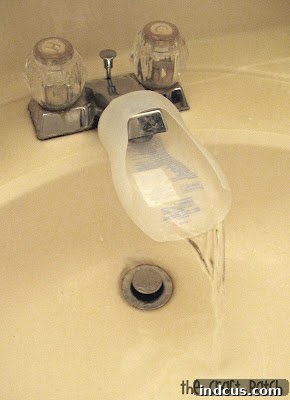
Welcome to Pinterest Tested! In an online world brimming with clever DIYs and seemingly magical home solutions, it’s easy to get swept away by the hype. Does that miracle cleaner truly deliver its promise? Is that homemade facial cleanser the secret to a radiant glow? Will that mouth-watering recipe actually turn out as pictured? This is precisely the place where we uncover the truth! Each Monday, we dive deep into popular Pins that catch our eye, rigorously testing their claims to see if they genuinely live up to the expectations set on Pinterest. Consider us the Mythbusters of Domesticity, dedicated to providing honest, real-world reviews for the modern home and family.

Pinterest Tested: The Genius DIY Faucet Extender for Toddler Handwashing
We are thrilled to be back with another compelling “Pinterest Tested” evaluation! After a brief, unforeseen hiatus – largely due to some pesky internet issues that threw our content schedule off course – we are re-energized, refocused, and ready to tackle more of your most intriguing DIY challenges. Thank you for your understanding and patience during our absence. Now, prepare for another insightful dive into practical, parent-approved solutions designed to simplify daily life.
The Universal Parenting Challenge: Promoting Independent Toddler Handwashing
Every parent understands the importance of good hand hygiene, especially for curious toddlers who touch everything. Instilling healthy handwashing habits from a young age is crucial for preventing the spread of germs and fostering self-care skills. However, the simple act of washing hands often presents a significant, daily hurdle for our smallest family members. Most standard bathroom sinks and faucets are inherently not designed with a toddler’s limited height and reach in mind. Our own little explorer, like many others, frequently faces this very dilemma.
Imagine this common scene: a determined toddler, precariously balanced on a stool, stretching and often having to lean awkwardly over the cold, hard edge of the counter, just to reach the running water. It’s an uncomfortable, sometimes frustrating, and potentially unsafe maneuver that can lead to slips or falls. Not only does it transform the vital task of handwashing into a challenging gymnastic feat, but it can also deter children from wanting to wash their hands independently, making hygiene a battle rather than a routine. This recurring struggle at the sink led us directly to this week’s featured Pinterest gem: a clever DIY faucet extender promising to bring the water closer to tiny hands, transforming the handwashing experience for toddlers and parents alike.
Our Pinterest Tested Criteria: Evaluating the DIY Faucet Extender
This week’s Pin presented a deceptively simple yet potentially revolutionary solution for a common toddler challenge. For this particular “Pinterest Tested” challenge, our primary investigative goals were clearly defined:
- Overall Effectiveness: Will this ingenious contraption genuinely empower our toddler to wash his hands more easily and independently? Does it enhance comfort, improve safety, and truly foster greater self-sufficiency in his daily hygiene routine?
- Ease of Creation & Accessibility: How difficult is this DIY project to assemble? Is it truly a quick, accessible, and budget-friendly hack for time-strapped parents, or does it demand specialized skills, obscure materials, or an extensive time commitment?
The prospect of finding a quick, cost-effective, and highly effective solution to a widespread parenting problem was simply too compelling to overlook. We were eager to put this Pin to the ultimate real-world test and determine if it could truly deliver on its promising claims.
Crafting the Faucet Extender: A Quick & Simple DIY Tutorial
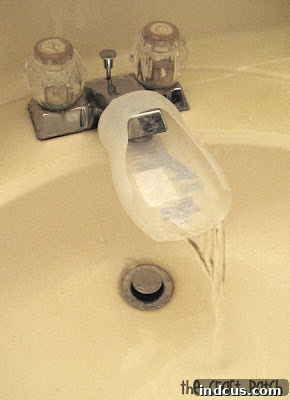
One of the most appealing and celebrated aspects of this particular Pinterest hack is its incredible simplicity and accessibility. You won’t need a professional workshop, a vast array of specialized tools, or advanced crafting expertise. The main component required? A readily available, everyday plastic bottle. For our testing purposes, we selected a sturdy, medium-sized bottle with a slightly narrower neck, which proved to be an ideal shape for effectively forming the crucial water channel. Here’s a detailed look at our homemade extender and the straightforward process to create your own:
Essential Materials You’ll Need:
- A clean, completely empty plastic bottle. Excellent choices include a dish soap bottle, a shampoo bottle, or any similar plastic container with a relatively flat and sturdy top section.
- An exacto knife or a sharp utility knife (Crucially, this step requires adult supervision and extreme caution.).
- A marker or pen (optional, but helpful for precisely marking your cut lines).
- A pair of scissors (optional, for making minor trims and refining edges).
Step-by-Step Construction Guide:
- Bottle Preparation: Begin by ensuring your chosen plastic bottle is thoroughly cleaned, completely dry, and free of any labels or residue.
- Identify the Cutting Zone: The primary objective is to create a channel that will effectively extend the flow of water. Locate the narrow lid section or the topmost part of the bottle. This specific area will serve as the “spout” for your new extender.
- Execute the Initial Cut: Using your exacto knife, very carefully and deliberately cut off the entire narrow lid section of the bottle. This will create the initial opening where the water from your existing faucet will enter. Exercise particular care during this step, as the plastic around bottle lids can often be thicker and may require a bit more pressure to cut through cleanly. Always ensure you are cutting away from yourself on a stable, protected surface.
- Sculpt the Water Channel: Once the lid is removed, you will need to precisely shape a U-shaped or V-shaped channel that extends outwards from this opening. This carefully crafted channel is designed to sit securely over your existing faucet spout and effectively guide the water stream forward. Begin by making two parallel cuts downwards from your initial opening, then connect these cuts with a horizontal incision at the desired length. The ultimate goal is to create a trough that is sufficiently wide to encompass the faucet spout and efficiently direct the water flow towards the front of the sink.
- Test Fit and Refine: Hold your newly fashioned extender up to your bathroom faucet. Check carefully to ensure it fits securely and that the channel effectively directs the water forward. You may find it necessary to make minor trims or delicate adjustments to the edges with your scissors or exacto knife to achieve a snug, optimal fit and the most efficient water flow.
The entire construction process was remarkably swift. From the moment we began gathering the modest materials to the final, precise fitting, this project truly took approximately five minutes. Yes, just five minutes! For a DIY solution that demands such minimal time and effort, its potential to impact daily family life felt genuinely significant.
First Impressions & Toddler Engagement: A Leap Towards Independence
As with any DIY solution designed for children, the true measure of its success lies in its practical, real-world application and, perhaps most importantly, in the unvarnished reaction of the child. One initial concern we held was that while the extender would undeniably bring the water closer, our toddler might still encounter difficulties with manipulating the faucet knobs to turn the water on and off. And, realistically, this observation largely remains accurate; he still requires a slight “belly hang” to reach and expertly manipulate the separate cold and hot water handles.
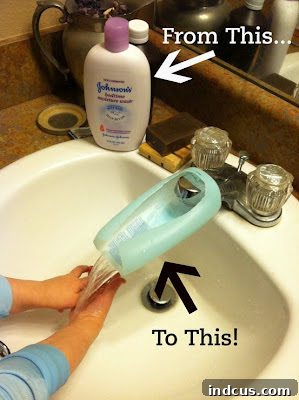
However, the transformation in the actual handwashing process, once the water is flowing, is nothing short of remarkable. Once the water stream is activated, he can effortlessly slide down to a far more comfortable and stable position on his sturdy step stool. Now, instead of struggling to contort himself to reach the distant water stream, he can confidently stand upright, easily place his hands directly under the extended flow, and wash them with unprecedented ease and independence. The visible shift in his posture, coupled with the newfound confidence radiating from his movements, was immediate, profound, and truly heartwarming to witness.
His reaction? A resounding chorus of absolute delight and unbridled enthusiasm! He genuinely adores this innovative new contraption. The simple fact that he can now reach the water effortlessly has profoundly transformed handwashing from a cumbersome, often frustrating chore into an engaging, enjoyable, and empowering activity. In fact, if there is any minor “negative” aspect to this project, it’s that he now wants to play in the water all day long! We are currently navigating the delicate balance between enthusiastically encouraging independence and gently managing spirited water play, but it is undeniably a small, joyful price to pay for such an unequivocally successful and impactful hack.
The Verdict: A Smashing Success for Independent Toddler Handwashing!
After thorough and extensive real-world testing, we can unequivocally declare this DIY faucet extender a resounding, unqualified success! This wonderfully simple, five-minute project has proven itself to be an incredibly effective, highly practical, and genuinely impactful solution to a common and persistent parenting challenge. It dramatically enhances a toddler’s ability to wash their hands with newfound independence, fostering a profound sense of accomplishment and transforming routine hygiene tasks into far more enjoyable and accessible experiences.
Key Benefits & Positive Impacts Observed:
- Significantly Increased Independence: Toddlers can now comfortably reach the water flow without extensive stretching, awkward contortions, or reliance on constant adult assistance.
- Enhanced Comfort & Safety: The design dramatically reduces the risk of slipping from stools or straining uncomfortably to reach the faucet, promoting a safer bathroom environment.
- Exceptional Cost-Effectiveness: Constructed from readily available recycled materials, this solution is virtually free, making it incredibly budget-friendly for any family.
- Remarkably Quick & Easy: The entire project can be completed in mere minutes using only basic household items, making it an accessible hack for even the busiest parents.
- Encourages Better Hygiene Habits: By making handwashing a positive, accessible, and enjoyable experience, it actively encourages toddlers to develop and maintain crucial hand hygiene habits.
The overwhelmingly positive impact was evident not only in our toddler’s burgeoning enthusiasm and newfound self-reliance but also in the genuinely impressed reaction of my husband. Upon witnessing the extender in action and observing its effortless functionality, he was truly amazed by its cleverness and practical design. Of course, my immediate, instinctual reaction was to blurt out, “Oh, I just saw it on Pinterest!” Perhaps next time, I’ll exercise a little more restraint and allow him to believe that I am, in fact, the brilliant mind behind such ingenious domestic innovations. A valuable and amusing lesson learned for all future “Pinterest Tested” reveals!
Beyond the Test: Long-Term Considerations & Practical Alternatives
While this DIY faucet extender is undeniably a clear winner for its immediate and significant benefits, it is also prudent to consider some of its long-term aspects and explore potential commercially available alternatives.
Durability and Ongoing Maintenance:
As this extender is crafted from a repurposed plastic bottle, its long-term durability will largely depend on the inherent strength and quality of the plastic used, as well as the frequency and intensity of its handling. For regular, careful use, it holds up remarkably well, but it might eventually exhibit minor signs of wear, such as scuffs or hairline cracks, particularly if it is frequently removed and reattached. Cleaning is refreshingly straightforward – a quick rinse under the tap with warm, soapy water is usually perfectly sufficient to maintain its cleanliness.
Addressing the Faucet Knob Challenge:
As we noted earlier, the DIY extender, by its design, does not inherently resolve the persistent issue of toddlers struggling to reach and manipulate the actual faucet knobs or handles. If your bathroom sink features modern lever handles, this might present less of a problem due to their easier grasp. However, for sinks equipped with traditional round knobs, adult assistance might still be necessary during the initial phase of turning the water on and off. Parents could potentially explore additional, more advanced DIY hacks for knob extenders, or simply continue to offer assistance until their child grows taller and gains greater dexterity.
DIY vs. Store-Bought Faucet Extenders:
The market today offers a diverse array of commercial faucet extenders, typically crafted from flexible silicone or robust plastics, designed to accommodate various faucet types. How does our resourceful DIY version stack up against these retail options?
- Cost Efficiency: The DIY version is virtually free to create, making it an incredibly economical choice. Store-bought versions typically range from $10 to $20, representing a modest but noticeable investment.
- Customization & Fit: The DIY extender can be uniquely tailored to the specific dimensions of your chosen bottle and faucet size, offering a degree of customization. Commercial options provide varying fits and may not always be perfectly compatible with every faucet design.
- Aesthetic Appeal: Store-bought extenders often boast a more polished, seamlessly integrated, and aesthetically refined look. Our DIY version is unapologetically functional and possesses a charming, rustic, upcycled appeal.
- Ease of Installation: Both DIY and commercial extenders are typically very easy to install, often simply slipping directly over the existing faucet spout without the need for complex tools or adhesives.
For budget-conscious families, creative individuals who enjoy upcycling projects, or those seeking an immediate, no-cost solution, the DIY version is an absolutely unbeatable choice. For families prioritizing a more permanent, aesthetically integrated, or standardized solution, a commercial product might be preferable. However, our conclusive “Pinterest Tested” verdict is that the DIY version stands as a highly effective, remarkably accessible, and undeniably ingenious solution to a common household need.
Join the Pinterest Tested Community and Share Your Hacks!
We sincerely hope this detailed and comprehensive review of the DIY faucet extender has provided invaluable insights and practical inspiration for parents navigating the exciting, sometimes challenging, journey of toddler handwashing. It stands as a vibrant testament to the incredible power of simple, creative ideas that can be discovered and brought to life from the vast landscape of online inspiration.
Do you have a personal favorite Pinterest hack that you’ve rigorously tried and tested in your own home? Or perhaps there’s a particular household challenge or viral DIY trend you’d love for us to put to the ultimate test? We warmly encourage you to share your thoughts, experiences, and suggestions in the comments section below! We are always enthusiastically on the lookout for the next great Pin to investigate, meticulously debunk, or joyfully celebrate. Stay tuned for more engaging “Pinterest Tested” adventures every Monday, where we continue our exciting exploration into the boundless ingenuity – and occasionally the amusing pitfalls – of the dynamic digital DIY world!