

Pinterest Tested: The Ultimate DIY Dishwasher Detergent Experiment
Welcome to the definitive “Pinterest Tested” series! In a world brimming with ingenious hacks and supposed miracle solutions shared across social media, it’s easy to get swept away by promises of effortless living and significant savings. But do these viral claims truly hold up in real-life scenarios? Here at Pinterest Tested, we’re dedicated to sifting through the noise, putting popular Pins to the rigorous test, and uncovering the honest truth behind their lofty claims. From innovative cleaning concoctions to delectable recipes and clever home organization tricks, we roll up our sleeves so you don’t have to. Think of us as the Mythbusters of Domesticity, meticulously examining each project with a critical eye to determine what genuinely works, what’s a waste of time, and what might even cause more trouble than it’s worth. Each week, we dive deep into a new Pin, sharing our unvarnished experiences and results.
This week, our investigative spotlight shines on a highly anticipated and frequently pinned topic: homemade dishwasher detergent. The promise? Sparkling clean dishes at a fraction of the cost of commercial brands. We’re eager to find out if this DIY solution is the real deal. You can find the original inspiration for this test via this link to the PIN.
The Grand Challenge: Can Homemade Dishwasher Detergent Truly Deliver?
Our Mission: Achieve Clean Dishes and Significant Savings
Following the unexpected success and ongoing efficiency of the homemade laundry soap I experimented with a few weeks prior, my curiosity was piqued. If I could effectively clean clothes with a DIY solution, why not dishes? The allure of making my own dishwasher detergent wasn’t just about the potential cost savings, which are always welcome, but also about exploring more natural, chemical-free alternatives for household cleaning. Many people seek to reduce their exposure to harsh chemicals found in conventional cleaning products, and DIY recipes often present themselves as a viable, greener option.
The core question for this week’s Pinterest Tested challenge is simple yet profound: Can a homemade dishwasher detergent mixture genuinely get my dishes sparkling clean, effectively rivaling store-bought brands, all while offering substantial financial savings? This isn’t just about a one-time clean; it’s about sustained performance, ease of use, and a tangible impact on the household budget.
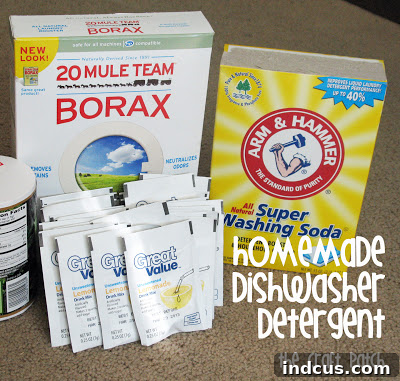
Simplicity in Preparation: No Soap Grating Required!
One of the immediate advantages of diving into the world of homemade dishwasher detergent, as opposed to its laundry counterpart, is its remarkable simplicity. There’s no tedious soap grating involved, a step that can often deter even the most enthusiastic DIYer. This recipe promised a straightforward, mix-and-go approach, which was incredibly appealing. In fact, the most “labor-intensive” part of the entire preparation process was merely opening all the individual packets of lemonade mix! This low barrier to entry makes it an attractive option for anyone looking to dip their toes into DIY cleaning without committing to complex procedures.
Unpacking the Ingredients: Borax, Washing Soda, and a Zesty Twist
The core of this homemade dishwasher detergent recipe consists of a few common and relatively inexpensive household ingredients:
- One box of Borax: Known for its powerful cleaning and deodorizing properties, Borax (sodium borate) acts as a natural cleaning booster. It helps to soften water and aid in the breakdown of grease and grime, making it a staple in many homemade cleaning recipes.
- One box of Washing Soda: Also known as soda ash or sodium carbonate, washing soda is a strong alkali that significantly boosts the cleaning power of the mixture. It helps to cut through tough food residues and stains, providing a deeper clean, especially in hard water areas.
- Twenty-four packets of Lemonade Mix (e.g., Kool-Aid): This is where the recipe gets its unique, zesty twist. While some recipes call for citric acid, the lemonade mix serves a similar purpose, providing acidity. The citric acid present in lemonade helps to combat hard water stains, prevent spotting, and add a refreshing scent. It’s also the element that adds a touch of fun to the otherwise utilitarian task of making detergent!
I combined these three ingredients in a large ice cream bucket, ensuring they were thoroughly mixed. The process was literally done in minutes—just scoop, pour, and stir. Easy peasy!
A Note on Variations: Salt and Citric Acid
While researching various homemade dishwasher detergent recipes, I noticed some variations. Specifically, some recipes recommended adding three cups of salt, while others omitted it entirely. Salt in dishwasher detergents often serves as a water softener, which can be particularly beneficial in regions with hard water to prevent mineral buildup and improve cleaning efficacy. However, for this initial test, I decided to leave the salt out. My reason wasn’t scientific; I simply forgot to pick it up at the store and didn’t want to make an extra trip. This oversight, however, would later become an interesting point of reflection.
Another common alternative I encountered was the substitution of ½ cup of pure citric acid for the lemonade packets. Citric acid is a highly effective chelating agent and a natural descaler, excellent for preventing water spots and limescale. While a more straightforward option for its specific cleaning properties, I couldn’t readily find pure citric acid at my local stores. Besides, there’s an undeniable charm and novelty in creating a cleaning product that features Kool-Aid, making the process a bit more memorable and, dare I say, enjoyable!
The Unsung Hero: White Vinegar as a Rinse Aid
An absolutely crucial component of this homemade dishwasher system, and indeed for achieving genuinely spotless dishes with any detergent (especially in hard water areas), is the inclusion of white vinegar as a rinse aid. Many people overlook the importance of a rinse aid, but it plays a vital role in preventing that unsightly white film or spotting on glassware and cutlery. White vinegar is a natural and remarkably effective rinse aid because its acidity helps to break down mineral deposits left by hard water and allows water to sheet off dishes, promoting faster drying and preventing spots.
Using it is incredibly simple: I just unscrewed the little round lid of my dishwasher’s rinse aid dispenser, poured in plain white vinegar until it reached the fill line, and then screwed the lid back on. This step was just as effortless as mixing the detergent itself and is non-negotiable for anyone hoping for truly clear, film-free dishes.
Dosage and Application
For each load of dishes, the recommended dosage for this homemade detergent is one tablespoon. This seems like a small amount, but given the concentrated nature of the ingredients, it’s typically sufficient to clean a full load. This sparse usage is key to maximizing the cost-effectiveness of the DIY solution, stretching the bulk ingredients over many uses.
Crunching the Numbers: The Cost Breakdown and Potential Savings
One of the primary motivations for trying homemade cleaning products is, without a doubt, the potential for significant cost savings. Let’s break down the initial investment for our batch of DIY dishwasher detergent:
- Borax: $3.38
- Washing Soda: $3.17
- Lemonade (24 packets): $2.88 (calculated at $0.12 per packet)
- Total Initial Investment: $9.43
Upon measuring, this single batch yielded enough detergent for a staggering 236 loads of dishes, assuming a one-tablespoon usage per load. This brings the cost per load down to approximately 4 cents!
Now, let’s compare this to conventional store-bought detergents. A typical average price for a load of commercial dishwasher detergent (whether it’s liquid, powder, or pods) often hovers around 14 cents per load, sometimes even more for premium brands or convenient pods. The difference is immediately striking: a 10-cent saving per load.
Long-Term Financial Impact: The Savings Add Up
While 10 cents per load might seem negligible on its own, the magic truly happens when you consider the cumulative effect over time. Let’s visualize the potential annual savings:
- If I wash one load of dishes per day: Over a year (365 days), that’s a saving of $0.10 x 365 = $36.50 per year.
- If I wash two loads of dishes per day: This doubles the savings to $0.10 x 730 = $73.00 per year.
And for larger families or those who run their dishwasher even more frequently, these savings could escalate further. $36 to $73 a year might not be life-changing, but it’s certainly nothing to scoff at. That’s money that could go towards groceries, a subscription service, or even building up a small emergency fund. The financial argument for homemade detergent appears compelling on paper.
Initial Impressions: A Promising Start
With the detergent mixed and the numbers crunched, it was time for the real test. I started using the homemade detergent for my daily dish loads. For the first few days, I put it through its paces with a variety of dirty dishes – everything from breakfast bowls with dried oatmeal to dinner plates with sauce residue and greasy pans. I keenly observed the results, comparing them mentally to the performance of my previous, much more expensive, Cascade detergent.
To my genuine surprise and satisfaction, the initial results were incredibly positive. After four loads of dishes, I honestly couldn’t discern any noticeable difference in cleanliness. Glasses were clear, plates were spotless, and silverware gleamed. There was no residue, no lingering food particles, and certainly no white film – thanks in large part, I presumed, to the crucial white vinegar rinse aid. It seemed like a genuine winner, living up to all the claims of efficacy and economy. I was quite pleased, thinking I had discovered a true Pinterest gem.
The Unvarnished Truth: Long-Term Performance and Unexpected Challenges
THE INITIAL RESULTS: This homemade detergent worked as well as my expensive store-bought alternative, saving me a significant dime every time I washed a load of dishes. What’s more, it was incredibly easy and quick to make!
Added later: The Honeymoon Period Ends…
While the initial few loads were perfectly clean and left me feeling triumphant, the true test of any cleaning product is its long-term performance. Unfortunately, after using this homemade detergent for a little longer – perhaps a week or two – a significant and disheartening problem began to emerge. I started noticing a distinctly unwelcome, cloudy white film progressively building up on my glass plates and cups. This wasn’t just a faint haze; it was a major and undeniable accumulation. What had initially seemed like a fantastic, budget-friendly solution was now causing more problems than it solved.
The film, which was particularly prominent on glass items, required manual scrubbing to remove, entirely defeating the purpose of a dishwasher. This issue became increasingly frustrating with each subsequent load, turning sparkling dishes into dull, hazy ones. It appears that while the detergent might have worked initially, its formulation was not robust enough to prevent mineral buildup or tackle tougher hard water conditions over time, despite the use of white vinegar as a rinse aid.
Added even later: The LemiShine Dilemma and the Final Verdict
Desperate to salvage the situation and make use of the large batch of homemade detergent I had already prepared, I decided to introduce an external additive known for combating hard water film: LemiShine. LemiShine is a well-regarded dishwasher additive specifically designed to remove hard water spots and film, restoring shine to dishes. True to its reputation, LemiShine effectively kept my dishes from getting that dreaded white film. My glassware once again emerged from the dishwasher sparkling clear.
However, this “solution” presented a new, critical dilemma: LemiShine is not cheap. Its cost effectively negated the entire purpose and appeal of making homemade detergent in the first place. The primary motivation for embarking on this DIY journey was to save money, and if I had to purchase an expensive additive to make the homemade detergent work, then the financial benefits vanished entirely. The dream of a cheap, effective, DIY cleaning solution was shattered.
Therefore, after extensive testing and grappling with the ongoing issues, my final verdict is clear: while this homemade dishwasher detergent might offer an initial glimmer of hope and cost savings, its long-term performance is unreliable, particularly if you have hard water or expect consistently spotless results. I will grudgingly use up the remaining batch I made, but I can definitively say that I absolutely will not be making more in the future. The effort to save a few dollars ultimately led to frustration and the need for costly supplements. Sometimes, the commercial solutions, despite their price tag, simply offer a level of consistent performance that homemade alternatives struggle to match.
The Takeaway from This Pinterest Tested Experiment
This journey into homemade dishwasher detergent serves as a perfect example of what “Pinterest Tested” is all about. Not every viral hack lives up to its promise, and sometimes, what seems like an ingenious money-saver can turn into a source of frustration. While the initial cost analysis of this DIY detergent was incredibly appealing, the real-world, long-term performance revealed its significant shortcomings.
For those living in areas with very soft water, this recipe might potentially yield better results. However, for the majority, especially those battling hard water, the film buildup is an undeniable issue that necessitates additional, often expensive, solutions like LemiShine, which ultimately defeats the financial purpose of going DIY. While the appeal of creating your own cleaning products is strong, it’s crucial to weigh the initial savings against the potential for ongoing problems and the need for supplementary products.
Our experiment underscores an important lesson: always approach DIY cleaning solutions with a healthy dose of skepticism and be prepared for trial and error. While the allure of saving money and using natural ingredients is powerful, consistency and effectiveness are paramount for everyday household chores. In this particular case, for reliable, film-free dishes, it seems that investing in a quality commercial dishwasher detergent might still be the most practical and least frustrating option.
Stay tuned for more Pinterest Tested adventures as we continue to debunk myths and uncover truths in the world of home hacks!