The Enduring Magic of a Handmade Fabric Quiet Book: A Decade of Discovery
In the vast world of children’s toys, few creations hold the enduring charm and educational power of a truly well-crafted fabric quiet book. For many new parents, the desire to provide enriching, screen-free experiences for their little ones sparks a journey into the realm of DIY projects. Eight years ago, as a budding mother navigating the beautiful chaos of new parenthood, I embarked on what would become my first truly ambitious sewing endeavor: a handmade quiet book designed to captivate and educate my child. Little did I know, this labor of love would become a cherished heirloom, still adored as my “little baby” prepares to celebrate their ninth birthday. This article delves into the intricate details of each page, the developmental benefits they offer, and the lasting legacy of a personalized learning tool.
Crafting Learning and Joy: Exploring Each Interactive Page
A quiet book is more than just a collection of fabric pages; it’s a portable world of sensory exploration and skill-building activities. Each page is thoughtfully designed to engage young minds and hands, fostering everything from fine motor skills to imaginative storytelling. Here’s a closer look at the pages that have delighted my children for years:
The Artist’s Palette: A Spectrum of Color Matching Fun
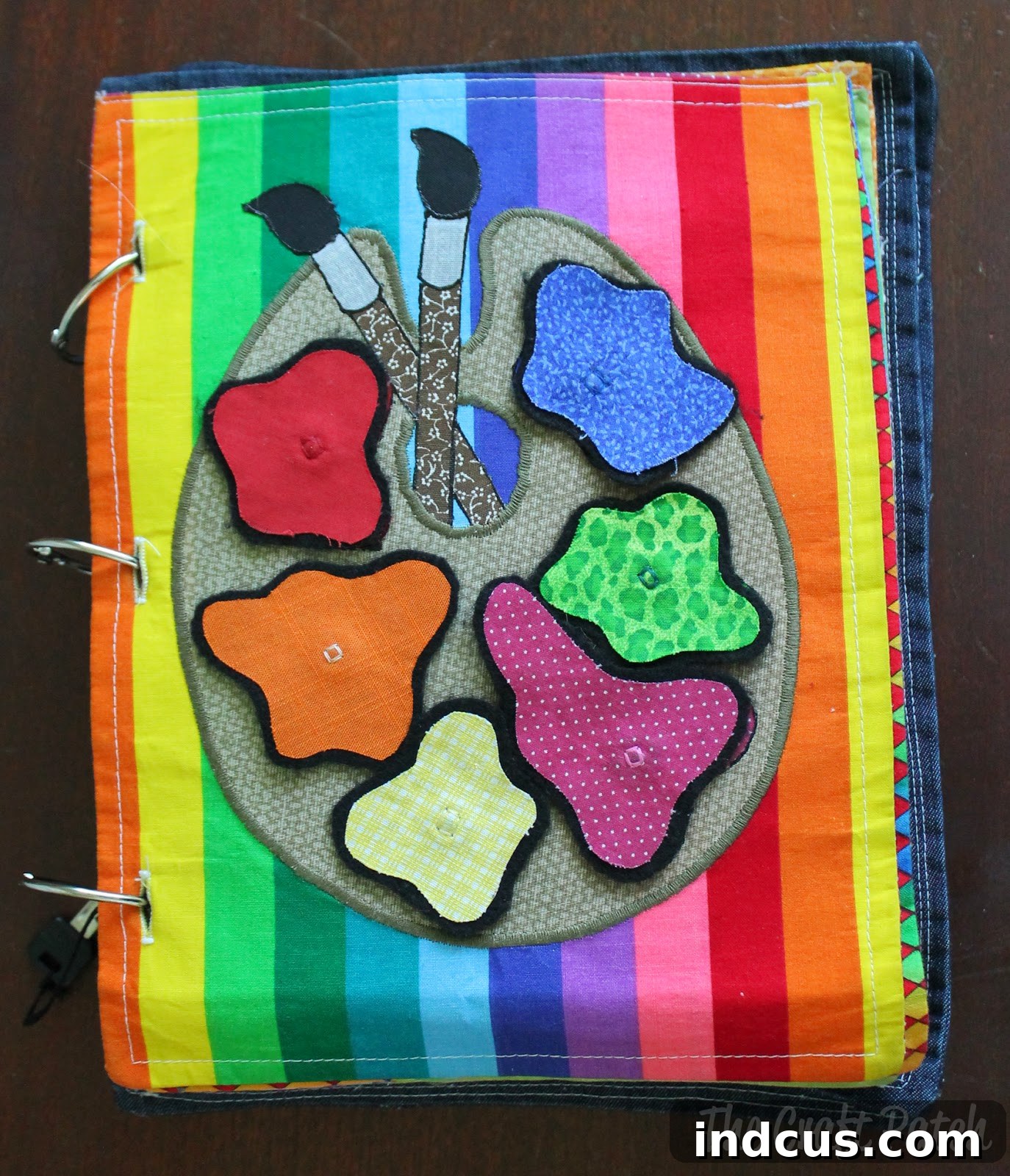
Our journey into the quiet book begins with a vibrant Artist’s Palette. This interactive page introduces early concepts of color recognition and matching in a playful, tactile way. Each distinct color swatch is equipped with a snap fastener, inviting little fingers to practice the satisfying motion of snapping them onto their corresponding places on the palette. Beyond simple matching, this activity hones crucial fine motor skills, hand-eye coordination, and problem-solving as children discover how each piece fits. It’s a wonderful foundation for visual discrimination and early cognitive development, making learning colors an engaging and interactive experience rather than a passive one.
Mr. Elephant’s Peanut Snack: A Lesson in Cause and Effect
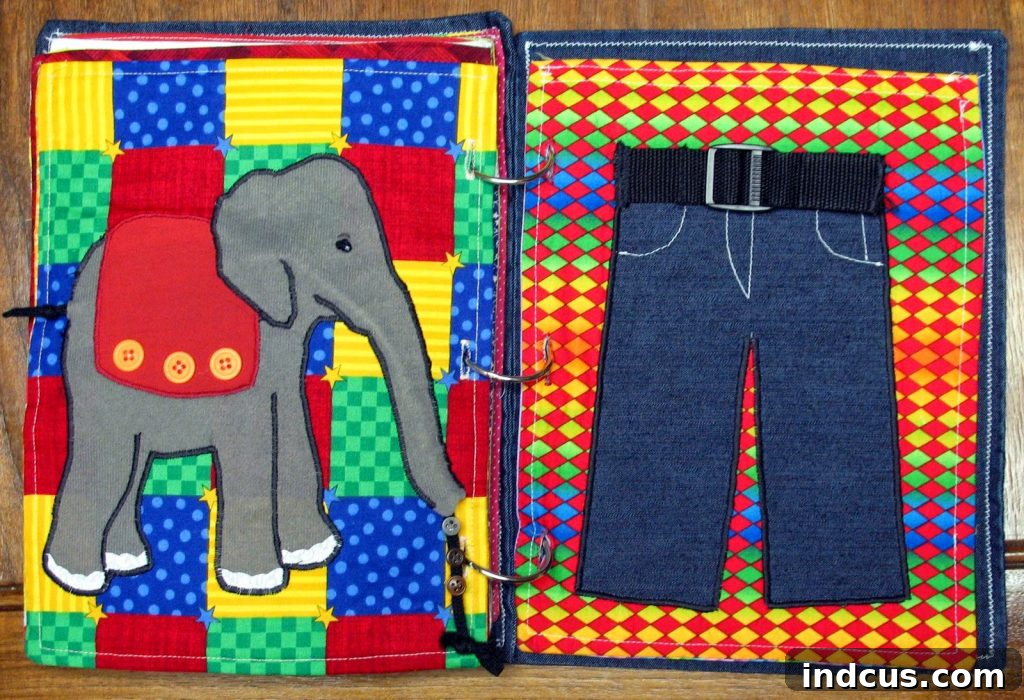
Next, we encounter the charming Mr. Elephant, a page that brings a touch of whimsy and teaches a fundamental principle of cause and effect. With a gentle pull on his tail, the tiny fabric peanuts magically disappear up his trunk, mimicking the real-life action of an elephant feeding. This simple yet ingenious design captivates children, encouraging repeated interaction. It promotes fine motor skills as they grasp and pull, and sparks imaginative play, inviting stories about Mr. Elephant’s adventures and his favorite snack. It’s a delightful introduction to how actions can lead to predictable outcomes, wrapped in an adorable animal theme.
Buckling Up: Mastering Practical Life Skills with Playful Pants
The subsequent page presents a pair of fabric pants featuring a real, functional belt buckle. This seemingly simple activity is a powerful tool for developing essential practical life skills. Children can practice latching and unlatching the belt, an action that directly translates to dressing themselves and fostering independence. The repetition involved strengthens finger dexterity and hand coordination, while the satisfaction of successfully buckling the belt boosts confidence. It’s a playful way to prepare them for daily routines, demonstrating that these “pants won’t fall down” as they master the skill of fastening.
The Treasure Chest: Unlocking Imagination and Surprises
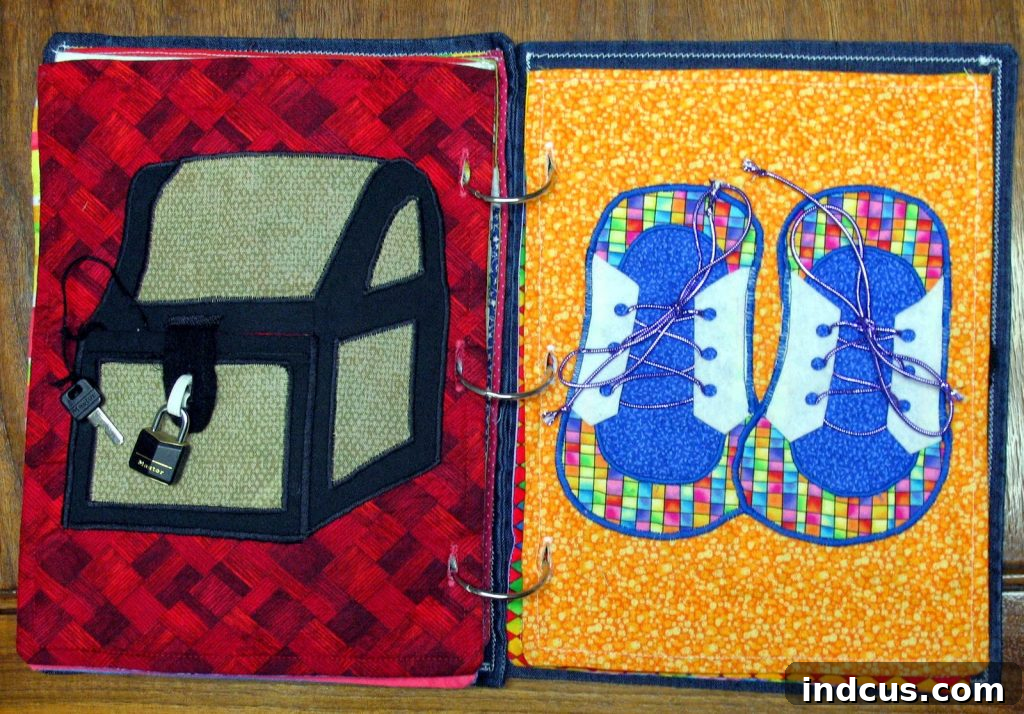
One of the most beloved and intriguing pages is undoubtedly the Treasure Chest. This page features a genuine lock and key, challenging little ones to engage in problem-solving and fine motor precision. The act of inserting the key, turning it, and unlocking the chest is incredibly satisfying and develops crucial dexterity. Once unlocked, a hidden pocket on the front reveals itself, offering a perfect spot for delightful surprises. Over the years, this pocket has held everything from small fruit snacks and cheerful stickers to secret messages, transforming the page into an exciting discovery every time. It’s a fantastic prop for imaginative play, encouraging children to create their own treasure hunt narratives and fostering a sense of wonder.
Tying Shoes: A Step-by-Step Guide to Independence
Learning to tie shoelaces is a significant milestone in a child’s development, and this quiet book page provides a safe, low-pressure environment for practice. Initially, it featured purple cording, but through experience, I discovered the importance of realism; I’ve since updated it with real shoelaces. This seemingly small change made a monumental difference, making the task less frustrating for both the child and the parent assisting them. The shoelace tying page helps children develop patience, perseverance, and advanced fine motor skills, breaking down a complex task into manageable steps. It’s a practical life skill that builds confidence and prepares them for greater independence.
The Piggy Bank & Tithing Envelope: Early Lessons in Financial Literacy
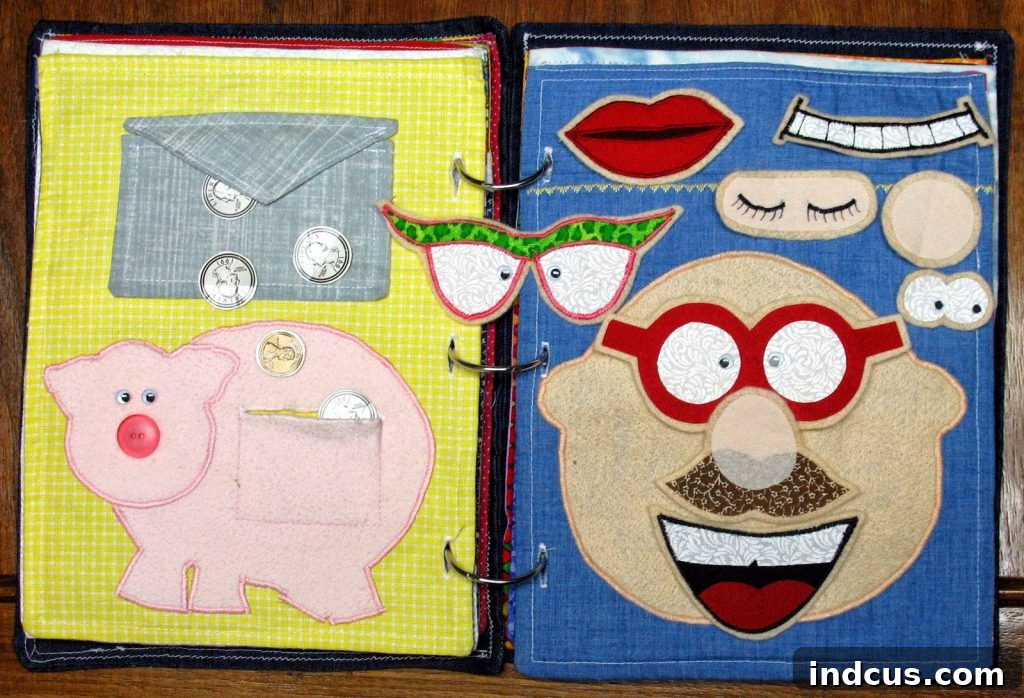
Introducing foundational concepts of money management and generosity, the piggy bank and tithing envelope page offers a unique learning opportunity. Equipped with pretend money, children can engage in simple decision-making: how much to save and how much to give to tithing or charity. This activity provides an accessible way to teach early math concepts, such as counting and basic allocation, while instilling values of saving and sharing. It encourages role-playing scenarios around shopping and financial choices, making abstract concepts tangible and understandable for young learners.
The Felt Faces Page: Expressing Creativity and Emotions
Universally adored, the felt faces page is a hub of creativity and emotional exploration. A large felt face shape serves as the canvas, and a collection of felt facial features (eyes, noses, mouths, hair) can be endlessly arranged and rearranged. The felt backing on each piece ensures they stick easily to the page, making it simple for children to design countless expressions. This activity promotes imaginative play, helps children recognize and express different emotions, and strengthens their understanding of facial anatomy. Ingeniously, the entire page is designed as a large pocket, offering a neat and convenient storage solution for all the felt pieces when not in use, fostering organizational habits.
The Unfinished Family Tree: A Glimpse into Imperfect Projects
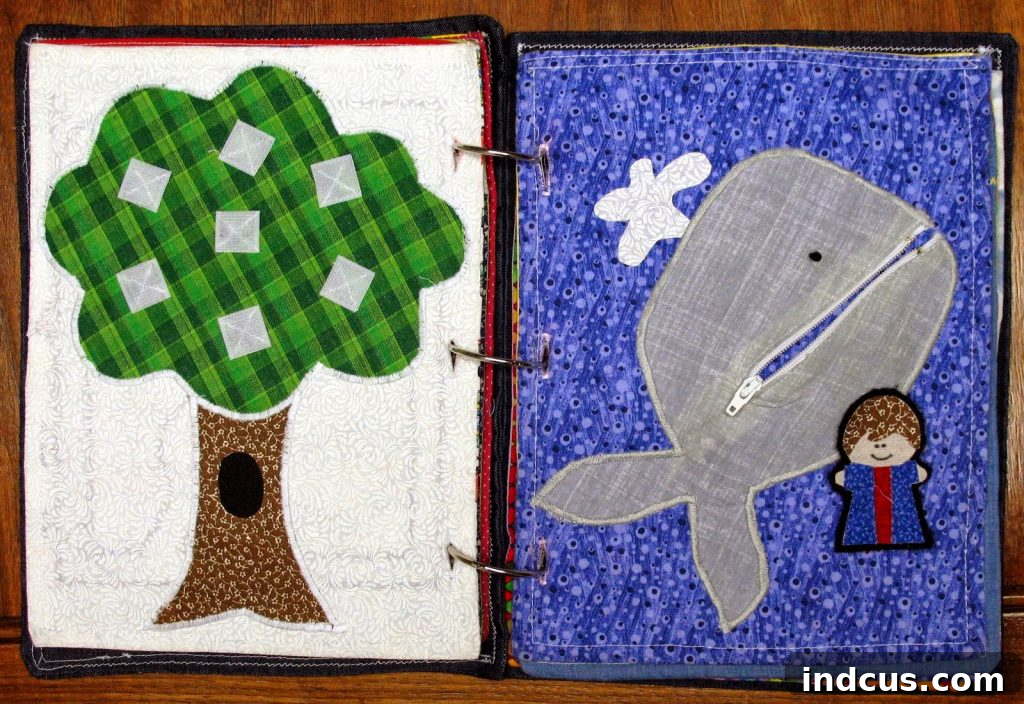
Not every project is completed exactly as envisioned, and the “family tree” page stands as a testament to that. While it remains unfinished, its original concept was brilliant: a fabric tree onto which apples, each bearing a picture of a family member, could be velcroed on and off. This page would have offered a wonderful way for children to learn family names, relationships, and tell stories about their loved ones. Even in its incomplete state, it represents the aspirational nature of handmade gifts and the journey of crafting, a reminder that the thought and effort behind a project are often as valuable as its flawless execution. It leaves room for future additions or simply serves as a conversation starter about family.
Jonah and the Whale: Storytelling Through Interactive Play
Bringing a classic story to life, the Jonah and the Whale page offers an interactive narrative experience. The whale features a working zipper mouth, allowing Jonah to be “eaten” and then safely “released.” This activity is fantastic for developing fine motor skills through zipper manipulation and encourages imaginative storytelling. Children can reenact the biblical tale or create their own adventures for Jonah and the whale, fostering a love for narrative and stimulating their creative thinking. It’s a tactile way to engage with stories, making them more memorable and interactive.
The Red, White, and Blue Pocket: A Home for Paper Dolls
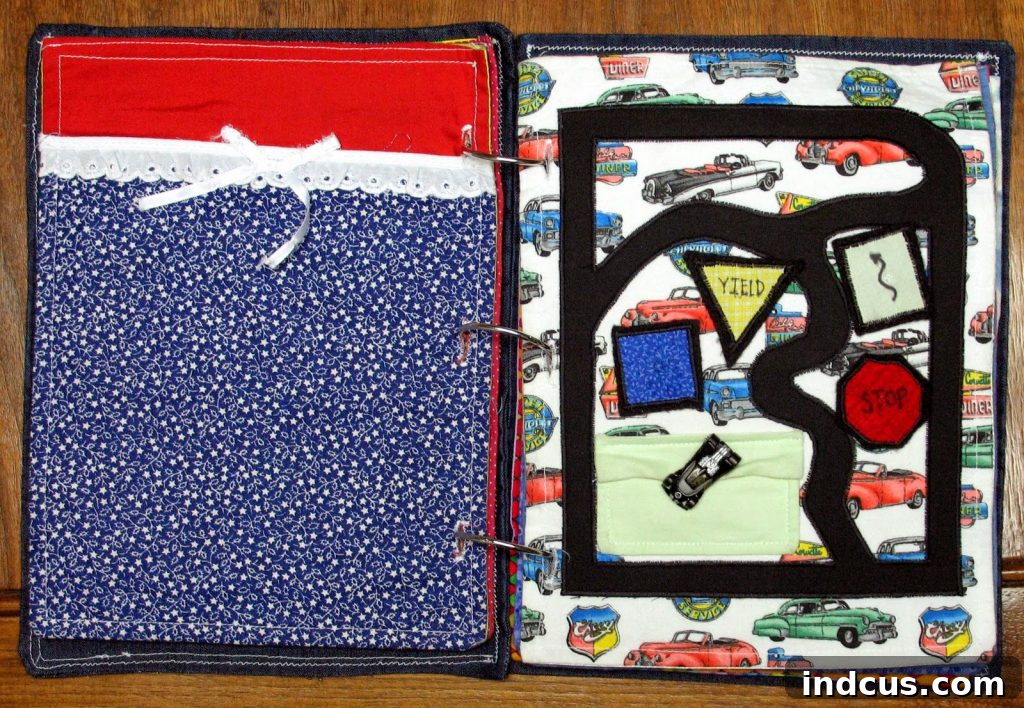
A simple yet versatile page, the red, white, and blue pocket serves as a charming storage spot for paper dolls. This page encourages open-ended imaginative play, allowing children to create scenes, dress the dolls, and invent their own characters and stories. The act of placing and retrieving the dolls from the pocket enhances fine motor skills and promotes organized play. It’s a wonderful blank canvas for creative expression, inviting children to explore different outfits, scenarios, and narratives with their paper companions.
The Race Track Page: Speed, Snaps, and Spatial Reasoning
A particular favorite for my son, the race track page is an exciting miniature world for play. Featuring a detailed fabric track, it allows a small micromachine car to zoom around and even “park” in a dedicated light green pocket. Adding to the fun, various fabric road signs, each with a snap fastener, can be attached and removed from around the track. This interactive page significantly boosts imaginative play, encouraging storytelling and role-playing scenarios. It also helps develop fine motor skills through snapping the signs and manipulating the car, as well as fostering spatial reasoning as children navigate the track.
Hair Braiding & Button Flowers: Developing Dexterity and Style
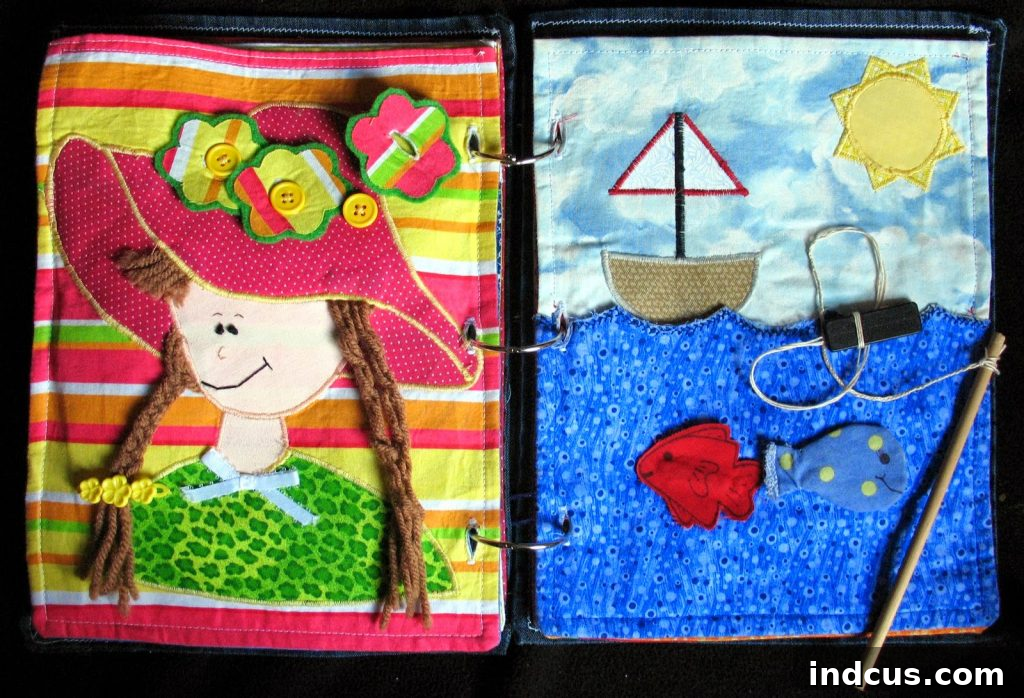
This page offers a fantastic opportunity to practice both hair braiding and buttoning skills. A fabric figure with “hair” invites children to learn the art of braiding, a practical life skill that requires patience and dexterity. Additionally, the flowers on her hat are designed with buttons and buttonholes, providing an engaging way to practice buttoning and unbuttoning. These activities are excellent for refining fine motor skills, hand-eye coordination, and problem-solving, all while fostering creativity and a sense of accomplishment. It’s a multi-faceted page that combines practical skills with imaginative play.
The Fishing Page: Magnetic Fun and Clever Storage
The fishing page is brimming with clever design and interactive fun. Fabric fish, each containing a hidden paper clip, become the targets for a magnetic fishing pole. Children delight in the cause-and-effect of the magnet attracting the fish, enhancing hand-eye coordination and fine motor control. The entire collection of fish and the pole can be neatly stored behind the page in a spacious pocket, which itself boasts a charming scalloped edge reminiscent of water. This page not only provides engaging play but also encourages tidiness and appreciation for creative details, making the storage part of the aesthetic.
The Creative Corner: Pockets for Crayons and Paper
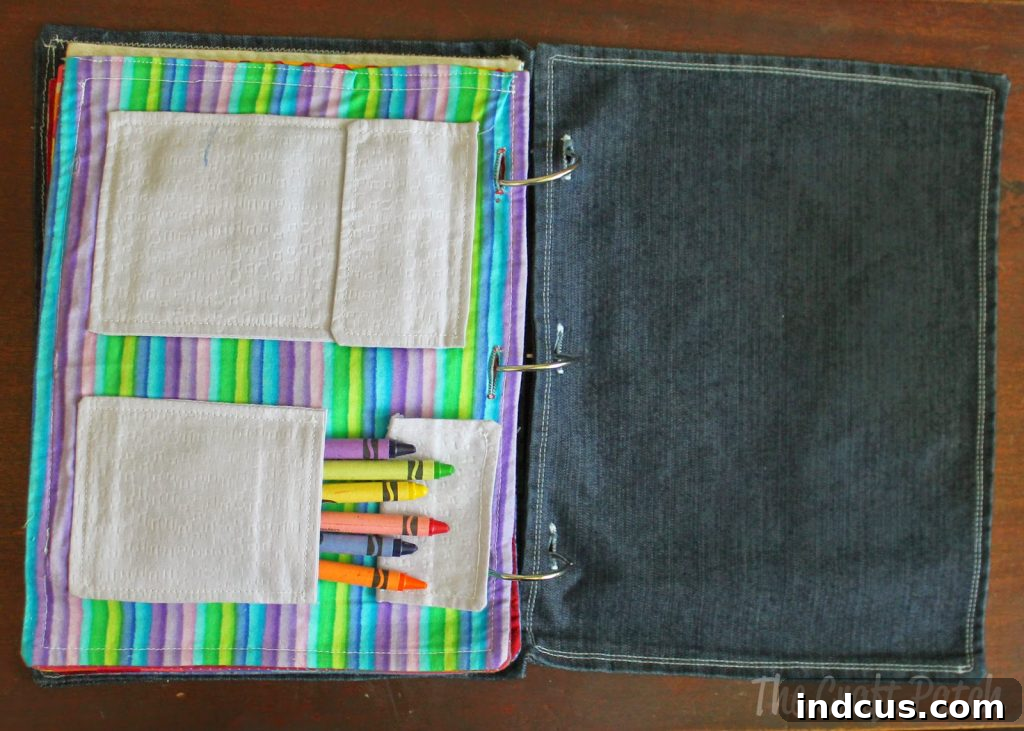
The very last page offers a simple yet invaluable space for open-ended creativity. It features two generous pockets: one perfectly sized to hold a set of crayons, and the other designed to accommodate a small pad of paper. This page provides an immediate outlet for artistic expression, encouraging children to draw, doodle, and create whenever inspiration strikes. It emphasizes the importance of accessible art supplies and serves as a quiet, reflective space within the book, promoting calm engagement and nurturing budding artists. The integrated storage makes it easy to keep everything together for on-the-go creativity.
The Craftsmanship Behind the Quiet Book: Durability and Design
The construction of this quiet book was as important as the activities within its pages. For durability and a classic look, the book cover was fashioned from sturdy denim, capable of withstanding years of enthusiastic play. Each individual fabric page was reinforced with iron-on fusing, adding stability and ensuring the pages hold their shape without fraying, even after countless hours of interaction. The binding method was chosen for its flexibility and ease of assembly: three carefully placed buttonholes down the side of each page. Through these buttonholes, metal rings were slid, securely binding the entire book together. This robust construction ensures the quiet book remains a beloved and functional toy for years, proving the lasting power of thoughtful, handmade craftsmanship.
Beyond the Book: A Matching Storage Solution
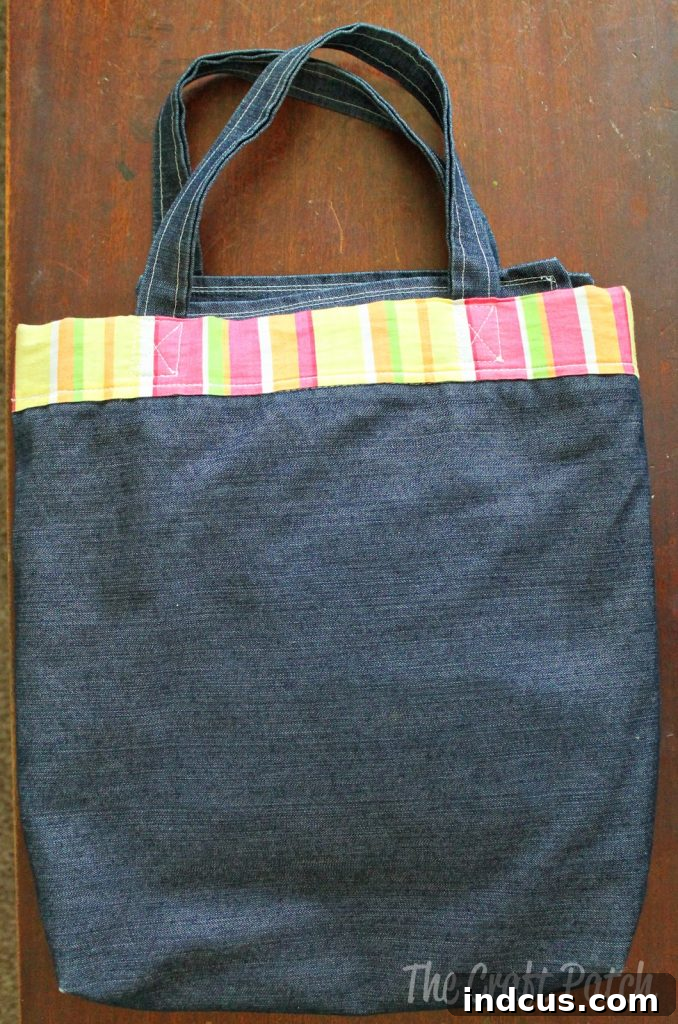
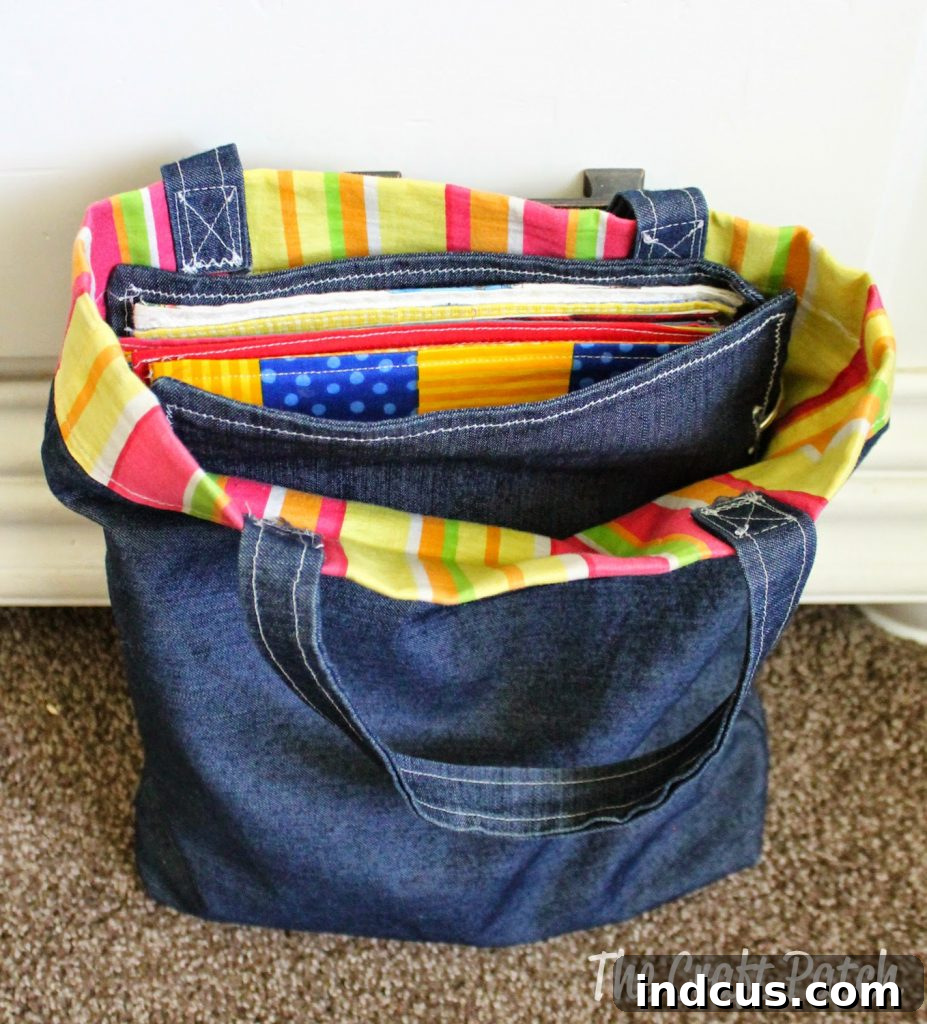
To complete this comprehensive learning set, a matching fabric bag was also sewn. This simple yet practical tote serves several crucial purposes: it protects the quiet book from dust and wear, keeps all its interactive components safely contained, and makes it incredibly portable. Whether for trips to grandma’s house, doctor’s appointments, or just moving from room to room, the matching bag ensures this precious educational toy is always ready for its next adventure. It adds an extra layer of care and organization to the entire handmade collection.
The Lasting Legacy of a Handmade Heirloom
Creating this fabric quiet book was, without a doubt, a significant undertaking—a true labor of love that demanded time, patience, and dedication. Yet, the rewards have been immeasurable. Years later, my children continue to engage with this book, finding new ways to play and learn from its interactive pages. It has transcended being just a toy; it has become a cherished family heirloom, filled with memories of quiet play, focused learning, and imaginative adventures. In an age dominated by screens, the tactile, engaging nature of a handmade quiet book offers a powerful antidote, fostering essential developmental skills and creating a tangible piece of family history that I truly hope will be passed down for generations to come. It stands as a testament to the profound value of handmade gifts and the enduring magic they bring into a child’s life.